Yeast Infections and Sexual Health
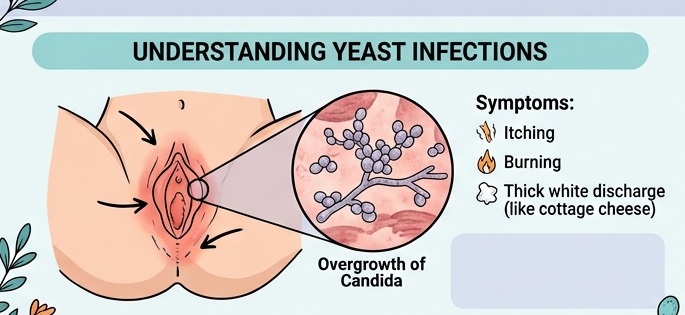
Vaginal yeast infections, also called vaginal candidiasis, are common infections caused by an overgrowth of Candida yeast. They can cause itching, irritation, redness, and changes in vaginal discharge.
Is a Yeast Infection an STI?
Usually, no. Vaginal yeast infections are not generally considered sexually transmitted infections (STIs). They can occur in women who are not sexually active.
However, sexual activity may sometimes contribute to irritation or make symptoms more noticeable. In some cases, Candida can be passed between sexual partners, but routine treatment of an asymptomatic partner is generally not recommended.
Common Symptoms
Typical symptoms include:
- Intense vaginal or vulvar itching
- Redness or swelling
- Burning or irritation
- Thick, white, usually odorless discharge
- Discomfort during sexual intercourse
- Burning during urination, particularly when urine contacts irritated skin
Not every woman experiences all of these symptoms.
Can You Have Sex During a Yeast Infection?
Sex is not usually dangerous because of the infection itself, but it may increase irritation and discomfort. Friction can make inflamed vaginal tissues feel worse and may delay recovery.
If intercourse is painful, it is better to wait until symptoms have improved.
Some antifungal vaginal creams and suppositories are oil-based and can weaken certain latex condoms or diaphragms. Check the product information carefully.
Yeast Infection vs. Other Vaginal Infections
It is important not to assume that every episode of itching or discharge is a yeast infection.
Yeast infection: often causes intense itching and thick white discharge.
Bacterial vaginosis: may cause thin grayish or white discharge with a noticeable fishy odor.
STIs: some can cause discharge, pelvic pain, sores, bleeding, or burning during urination.
Because symptoms can overlap, persistent or recurrent symptoms should be evaluated by a healthcare professional.
How to Reduce the Risk
You can support vaginal health by:
- Avoiding vaginal douching
- Avoiding strongly scented intimate products
- Keeping the genital area clean and dry
- Changing out of wet clothing promptly
- Wearing breathable underwear
- Avoiding unnecessary antibiotics
- Using condoms to reduce STI risk when appropriate
There is no need to wash inside the vagina. The vagina naturally maintains its own environment.
When Should You See a Doctor?
Seek medical advice if:
- This is your first suspected yeast infection
- Symptoms are severe
- Symptoms do not improve with appropriate treatment
- Infections keep coming back
- You are pregnant
- You have fever, pelvic pain, sores, or unusual bleeding
- You are unsure whether the symptoms are caused by a yeast infection
Key Takeaway
Vaginal yeast infections are common and are usually not sexually transmitted. Sexual activity can sometimes worsen irritation, so avoiding painful intercourse until symptoms improve may be helpful. If symptoms are persistent, severe, or recurrent, proper diagnosis is important because other vaginal infections and STIs can cause similar symptoms.
For more women's health information, visit:
www.cashbackhospitalandlab.com
Health information disclaimer: This article is for general educational purposes and does not replace professional medical diagnosis or treatment.