

Vaginal Discharge: What Is Normal and What Is Not?
Vaginal discharge is a healthy and completely normal fluid produced by glands inside the vagina and cervix to clear out dead cells and bacteria, keeping the reproductive tract clean and infection-free.
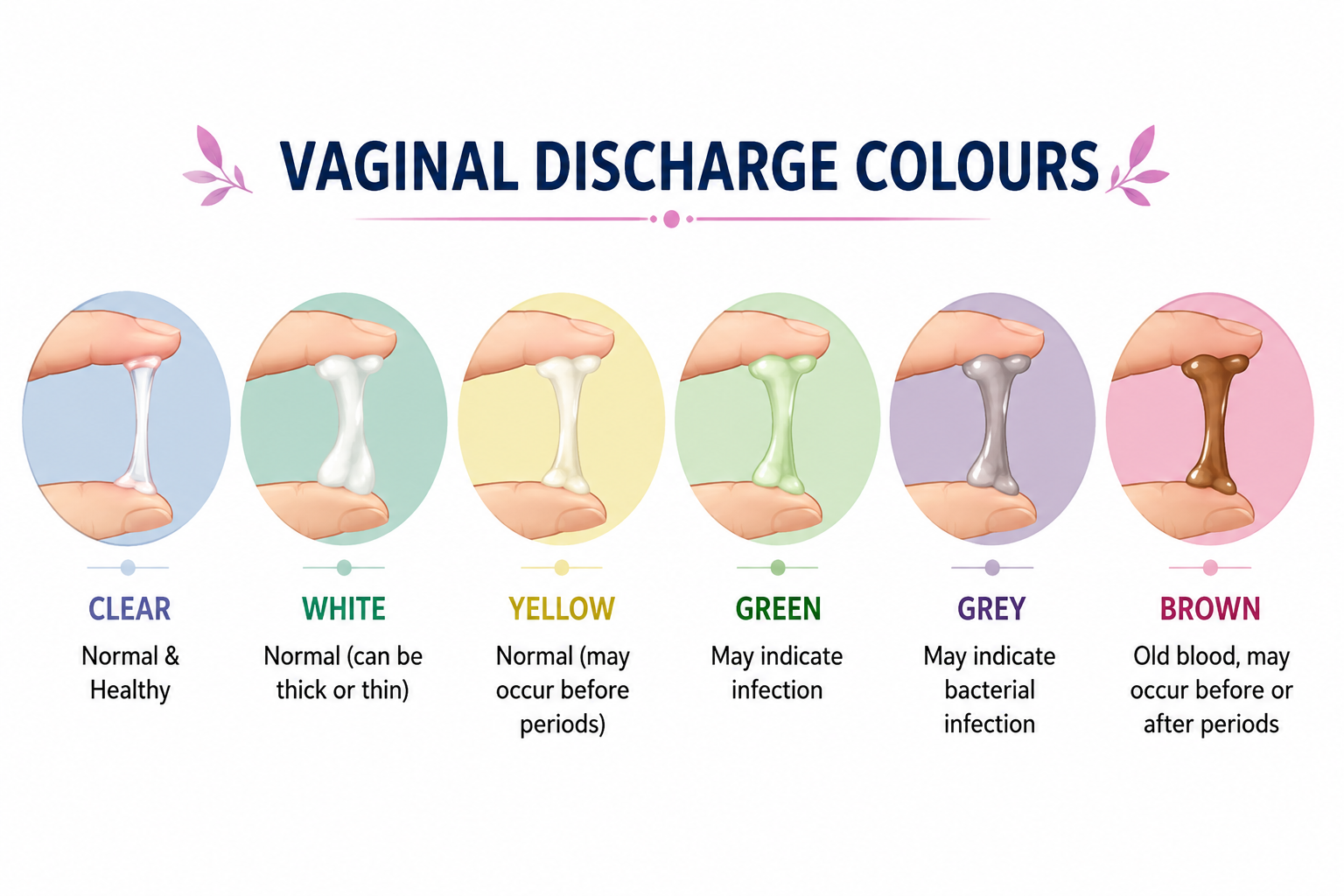
The visual below outlines how variations in color and texture correspond to standard cycle changes versus signs of a potential issue.
What Is Normal
Healthy discharge varies in color, consistency, and amount throughout your menstrual cycle due to hormonal shifts:
- Clear and Watery: Common after exercise or at random points during your cycle.
- Clear and Stretchy (Egg-white consistency): A classic sign of ovulation, indicating peak fertility.
- Milky White or Off-White: Normal at the beginning or end of your cycle. As long as it is smooth and lacks a strong odor, it is healthy.
- Slight Yellow: Often occurs right before or after your period as light blood mixes with normal fluid.
What Is Not Normal
Changes in color, consistency, or smell—especially when paired with physical discomfort—usually indicate an imbalance, infection, or irritation:
| Type / Appearance | Common Cause | Accompanying Symptoms |
| Clumpy White (Cottage cheese texture) | Yeast Infection | Intense itching, burning, redness around the vulva |
| Thin Gray or Milky White | Bacterial Vaginosis (BV) | Strong "fishy" odor that becomes more noticeable after sex |
| Yellow-Green or Frothy | Trichomoniasis (STI) | Foul odor, painful urination, itching or soreness |
| Brown or Bloody (Outside period) | Irregular bleeding, hormonal changes, or STIs | Pelvic pain or bleeding after intercourse |
When to See a Healthcare Provider
Consult a doctor or gynecologist if you notice any of the following symptoms alongside discharge changes:
- Sudden change in color, texture, or volume
- Strong, persistent, or foul odor
- Itching, swelling, or burning around the vulva or vagina
- Pain during urination or sexual intercourse
- Unexpected pelvic or lower abdominal pain