UTIs and Sexual Activity: Prevention Tips
Urinary tract infections (UTIs) are common, especially in women. Sexual activity can sometimes increase the risk of a UTI because bacteria from the surrounding skin or bowel area can enter the urethra and travel into the urinary tract.
The good news is that simple hygiene and lifestyle habits can help reduce the risk.
What Is a UTI?
A urinary tract infection is an infection affecting any part of the urinary system, including the bladder, urethra, ureters, or kidneys. Most uncomplicated UTIs involve the bladder and cause symptoms such as burning during urination, frequent urination, or an urgent need to urinate.
Sexual activity does not directly cause a UTI, but friction and movement during sex can make it easier for bacteria to reach the urethra.
Why Can Sexual Activity Increase UTI Risk?
The female urethra is relatively short and located close to the vagina and anus. During sexual activity, bacteria can sometimes be pushed toward the urethral opening.
Some women notice that UTI symptoms appear within a day or two after sexual activity. This is sometimes referred to as a “honeymoon UTI,” although UTIs can occur regardless of relationship status or sexual frequency.
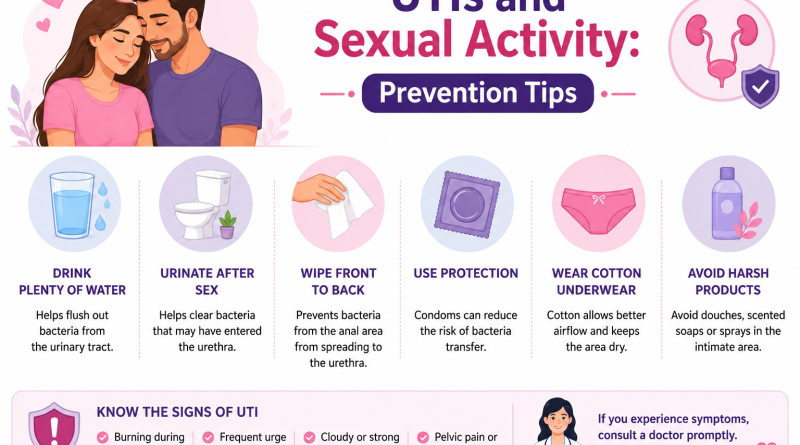
7 Tips to Help Prevent UTIs
1. Drink Enough Water
Staying adequately hydrated helps maintain regular urination and may help flush bacteria from the urinary tract.
Avoid deliberately restricting fluids to reduce trips to the bathroom.
2. Urinate After Sexual Activity
Going to the bathroom after sex may help remove bacteria that have entered the urethra.
There is no need to force yourself to urinate immediately, but making it part of your routine after sexual activity can be a reasonable preventive habit.
3. Wipe From Front to Back
After using the toilet, wipe from front to back rather than back to front. This helps reduce the chance of transferring bacteria from the anal area toward the urethra.
4. Practice Gentle Intimate Hygiene
The vagina naturally maintains its own healthy environment. Avoid douching and unnecessary scented sprays, washes, or harsh soaps around the genital area, as these may cause irritation.
Gentle external cleansing with water and a mild, unscented product is generally sufficient.
5. Consider Barrier Protection
Condoms can help reduce the transmission of sexually transmitted infections (STIs). However, some women find that certain contraceptive products, particularly spermicides, are associated with more frequent UTIs.
If UTIs repeatedly occur after sexual activity, discuss contraception options with a healthcare professional.
6. Wear Breathable Underwear
Cotton or other breathable underwear can help reduce moisture around the genital area. Avoid staying for long periods in damp clothing, particularly after exercise or swimming.
7. Don't Hold Urine for Long Periods
When you need to urinate, try not to regularly delay it for prolonged periods. Maintaining normal bladder habits is part of good urinary health.
Common Symptoms of a UTI
Watch for symptoms such as:
- Burning or pain while urinating
- Frequent need to urinate
- Sudden or urgent need to urinate
- Passing only small amounts of urine
- Lower abdominal or pelvic discomfort
- Cloudy or strong-smelling urine
- Blood in the urine
These symptoms can have different causes, so proper evaluation is important rather than assuming every symptom is a UTI.
When Should You See a Doctor?
Seek medical advice if you develop symptoms of a UTI, particularly if symptoms are severe, persistent, or keep coming back.
Seek prompt medical attention if you have:
- Fever or chills
- Pain in the back or side
- Nausea or vomiting
- Blood in the urine
- Significant weakness or feeling very unwell
- Symptoms during pregnancy
These symptoms may indicate that an infection has reached the kidneys or that another condition needs evaluation.
What About Recurrent UTIs?
If UTIs occur repeatedly, don't simply keep treating them yourself. A healthcare professional may need to confirm the diagnosis and look for contributing factors.
Recurrent infections can sometimes be associated with sexual activity, certain contraceptive methods, menopause-related changes, urinary tract abnormalities, or other factors.
UTI Prevention: Key Takeaway
Sexual activity can increase the risk of UTIs in some women, but a few simple habits may help:
Stay hydrated • Urinate regularly • Urinate after sex • Wipe front to back • Avoid harsh intimate products • Practice safe sex • Seek medical care for persistent or recurrent symptoms
UTIs are common and treatable, but symptoms should not be ignored—especially when accompanied by fever, back pain, vomiting, or recurrent infections.
Health Information Disclaimer
This article is intended for general health education and does not replace professional medical diagnosis or treatment. If you have symptoms of a UTI or recurrent urinary problems, consult a qualified healthcare professional.
For more women's health and wellness information, visit:
www.cashbackhospitalandlab.com