High Cholesterol: 7 Things Every Adult Should Know
High cholesterol is common and often has no obvious symptoms, but over time it can increase the risk of heart disease, heart attack, and stroke. Knowing your cholesterol numbers and taking steps to manage them can protect your long-term health.
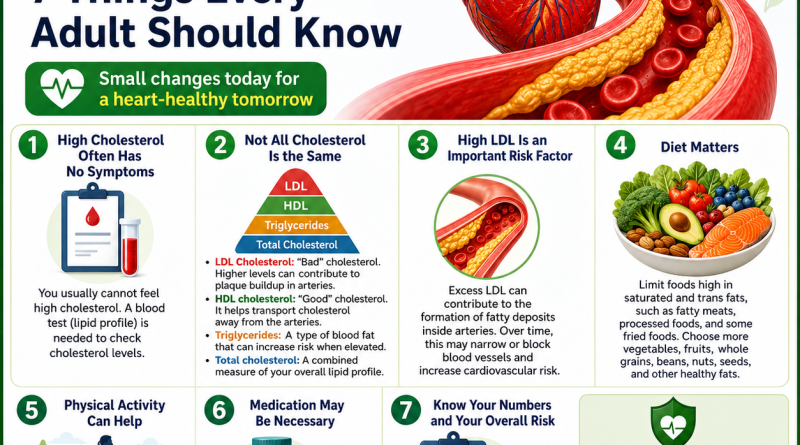
1. High Cholesterol Often Has No Symptoms
You usually cannot feel high cholesterol. A blood test (lipid profile) is needed to check cholesterol levels.
2. Not All Cholesterol Is the Same
Your lipid profile may include:
- LDL cholesterol: Often called “bad” cholesterol. Higher levels can contribute to plaque buildup in arteries.
- HDL cholesterol: Often called “good” cholesterol because it helps transport cholesterol away from the arteries.
- Triglycerides: Another type of blood fat that can increase cardiovascular risk when elevated.
- Total cholesterol: A combined measure that helps assess your overall lipid profile.
3. High LDL Is an Important Risk Factor
Excess LDL can contribute to the formation of fatty deposits inside arteries. Over time, this may narrow or block blood vessels and increase cardiovascular risk.
4. Diet Matters
Limit foods high in saturated and trans fats, such as fatty meats, processed foods, and some fried foods. Choose more vegetables, fruits, whole grains, beans, nuts, seeds, and other sources of healthy fats.
5. Physical Activity Can Help
Regular exercise can improve cholesterol levels and support healthy blood pressure, weight, and heart function. Aim for consistent physical activity according to your fitness level and medical advice.
6. Medication May Be Necessary
Lifestyle changes are important, but some adults need cholesterol-lowering medicines such as statins because of their overall cardiovascular risk. Never start, stop, or change cholesterol medication without discussing it with a healthcare professional.
7. Know Your Numbers and Your Overall Risk
A cholesterol result should not be considered in isolation. Your doctor may also consider age, blood pressure, diabetes, smoking, family history, previous cardiovascular disease, and other risk factors when deciding whether treatment is needed.
Takeaway
High cholesterol is manageable, especially when detected early. Get your lipid profile checked when recommended, maintain a heart-healthy lifestyle, and discuss your results with a healthcare professional.
For more health and wellness information, visit:
www.cashbackhospitalandlab.com
This article is for general education and does not replace personalized medical advice.