Color Your Hair and Your Health: What You Should Know
Hair coloring is a popular way to change your appearance, but hair dyes contain chemicals that can affect the hair, scalp and skin. Understanding safe hair-coloring practices can help you enjoy your new look while reducing potential risks.
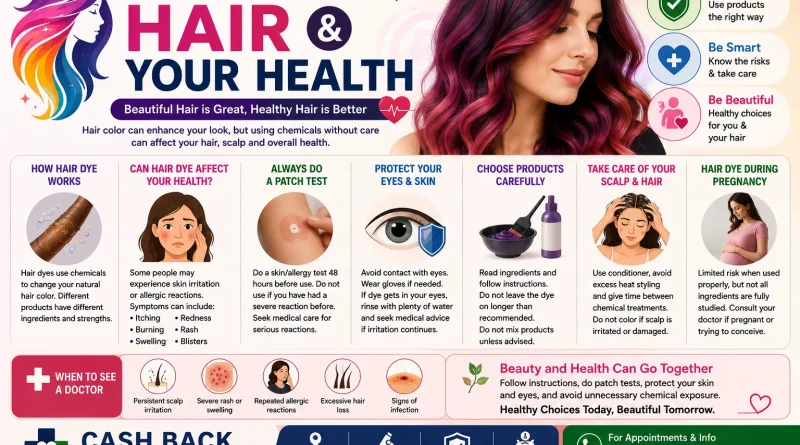
💇 How Hair Dye Works
Permanent and some semi-permanent hair dyes contain chemicals that change the natural color of the hair. Permanent dyes generally work by opening the hair cuticle and using chemical reactions to create longer-lasting color.
Different products have different ingredients and strengths.
⚠️ Can Hair Dye Affect Your Health?
Most people use hair dye without serious problems, but some individuals can develop skin irritation or allergic reactions.
Possible reactions include:
- Itching
- Redness
- Burning or irritation
- Swelling
- Rash
- Blisters
A reaction can occur even if you have used the same product safely before.
🧪 Always Do a Patch Test
Follow the product's instructions for an allergy/skin test before using a new hair-color product.
Do not use hair dye if you have previously experienced a serious reaction to it.
If you develop significant swelling, difficulty breathing or other symptoms suggesting a severe allergic reaction, seek emergency medical care.
👁️ Protect Your Eyes and Skin
Hair dye should not be allowed to enter the eyes. Wear appropriate protection and follow the product instructions.
If dye gets into your eyes, rinse thoroughly with clean water and seek medical advice if irritation persists or vision is affected.
🌿 Choose Hair Products Carefully
Look at the ingredients and follow the manufacturer's instructions.
Avoid leaving dye on longer than recommended. Do not mix different hair-color products unless the instructions specifically say it is safe.
💆 Take Care of Your Scalp and Hair
Frequent coloring, bleaching and heat styling can make hair dry, brittle or more prone to breakage.
To protect your hair:
- Use a suitable conditioner.
- Avoid excessive heat styling.
- Allow adequate time between chemical treatments.
- Avoid coloring an irritated or damaged scalp.
- Follow recommended processing times.
🤰 Hair Dye During Pregnancy
People who are pregnant or trying to become pregnant may have questions about hair dye safety. Exposure is generally limited when products are used correctly, but evidence is not complete for every ingredient and product.
If you are pregnant or have specific concerns, discuss your preferred hair-coloring products with your healthcare professional.
🧑⚕️ When Should You See a Doctor?
Consult a healthcare professional if you experience:
- Persistent scalp irritation
- Severe rash or swelling
- Repeated allergic reactions
- Hair loss that continues or becomes significant
- Signs of infection
🌈 Beauty and Health Can Go Together
Coloring your hair can be part of personal style and self-expression. The key is to use products according to instructions, perform recommended allergy testing, protect your skin and eyes, and avoid unnecessary chemical exposure.
Cash Back Hospital & Lab
Your Health. Your Care. Your Savings.
Disclaimer: This article is for general educational purposes only and does not replace professional medical advice, diagnosis or treatment.