
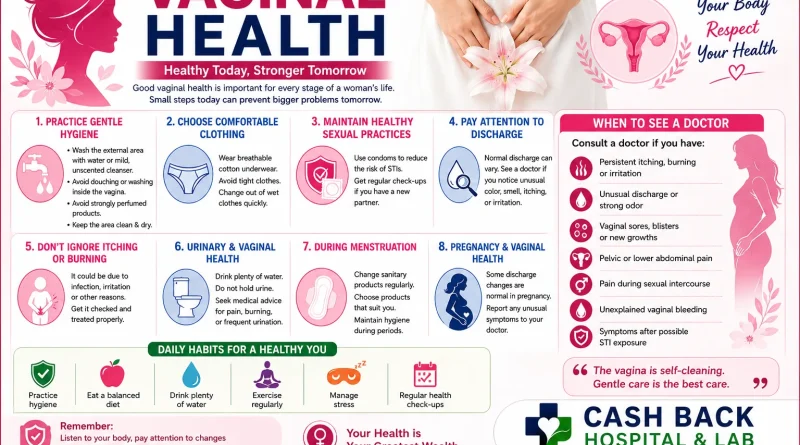
Vaginal Health: Important Tips for Women
Vaginal health is an important part of a woman's overall health. Understanding what is normal, practicing good hygiene and seeking medical care when symptoms occur can help prevent complications and support well-being.
🌸 What Is Normal?
The vagina naturally contains healthy bacteria that help maintain its normal environment. Mild vaginal discharge can be completely normal, and its amount and appearance can change during the menstrual cycle.
A healthy vagina does not need strong fragrances or special cleansing products.
1. Practice Gentle Hygiene
- Wash the external genital area gently with water or a mild, unscented cleanser if needed.
- Avoid douching or washing inside the vagina.
- Avoid strongly perfumed sprays, wipes and intimate products.
- Keep the area clean and dry.
2. Choose Comfortable Clothing
Tight or non-breathable clothing can increase moisture and irritation. Choose comfortable, breathable underwear and change out of wet clothing promptly after swimming or exercise.
3. Maintain Healthy Sexual Practices
Using condoms can reduce the risk of many sexually transmitted infections (STIs). If you have a new partner or concerns about exposure, appropriate STI testing can be important.
4. Pay Attention to Vaginal Discharge
See a healthcare professional if you notice a new or persistent change in discharge, particularly if it is accompanied by:
- Strong or unusual odor
- Itching or burning
- Pelvic pain
- Pain during sex
- Bleeding that is unusual for you
These symptoms can have different causes, including infections, and should not be self-diagnosed solely from appearance.
5. Don't Ignore Vaginal Itching or Burning
Itching or burning can occur with conditions such as yeast infections, bacterial vaginosis, STIs, skin irritation or other problems.
Avoid repeatedly treating yourself without knowing the cause. A healthcare professional can determine the appropriate treatment.
6. Urinary and Vaginal Health
Vaginal and urinary symptoms can sometimes occur together. Drink adequate fluids and seek medical advice if you experience painful urination, frequent urination, blood in the urine or persistent pelvic discomfort.
7. During Menstruation
Change sanitary products regularly and choose products that are comfortable for you. Wash your hands before and after changing menstrual products.
If menstrual bleeding is unusually heavy, prolonged or associated with severe pain, discuss it with a healthcare professional.
8. Pregnancy and Vaginal Health
Pregnancy can cause normal changes in vaginal discharge. However, unusual odor, itching, burning, bleeding or significant pain during pregnancy should be discussed promptly with a healthcare professional.
🚨 When to See a Doctor
Seek medical advice for:
- Persistent itching or burning
- Unusual discharge or strong odor
- Vaginal sores, blisters or new growths
- Pelvic or lower abdominal pain
- Pain during sexual intercourse
- Unexplained vaginal bleeding
- Symptoms following possible STI exposure
Remember
The vagina is self-cleaning. Gentle external hygiene is usually enough.
Avoid douching and unnecessary fragranced products, pay attention to changes in your body and seek professional advice when symptoms persist.
Cash Back Hospital & Lab
Cash Back Hospital & Lab is committed to providing useful women's health information to help women make informed healthcare decisions.
Your Health. Your Care. Your Savings.
Disclaimer: This article is for general educational purposes only and does not replace professional medical advice, diagnosis or treatment.