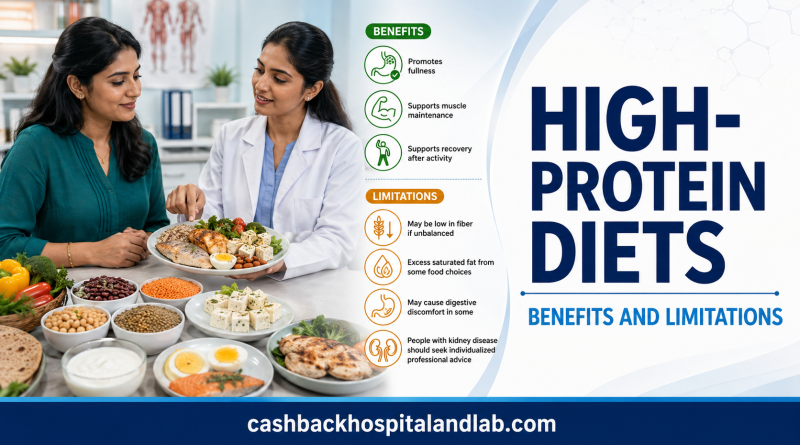
High-Protein Diets Benefits and Limitations
How Much Protein Do You Need, Best Food Sources, Weight-Loss Benefits, Muscle Health, Kidney Concerns and Practical Guidelines

Protein is an essential nutrient required for muscles, enzymes, hormones, immune function, tissue repair and many other biological processes.
High-protein diets have become especially popular for weight loss, bodybuilding, diabetes management and healthy ageing. Protein can improve satiety and help preserve muscle during weight loss, but more protein is not automatically better.
A healthy protein intake depends on your age, body size, physical activity, total calorie intake, health conditions and goals.
The goal should be adequate high-quality protein within a balanced diet—not simply eating as much protein as possible.
1. What Is Protein?
Protein is one of the three major macronutrients:
Protein
Carbohydrate
Fat
Proteins are made from smaller molecules called:
Amino acids
The body uses amino acids to build and maintain tissues and produce important biological compounds.
2. Why Does the Body Need Protein?
Protein contributes to:
Muscle maintenance
Tissue repair
Enzyme production
Hormone production
Immune function
Skin and hair structure
Transport of substances in the blood
Protein is therefore essential at every stage of life.
3. Essential Amino Acids
Some amino acids can be produced by the body.
Others must be obtained from food.
These are called:
Essential amino acids
A nutritious diet should provide sufficient amounts of all essential amino acids.
4. What Is a High-Protein Diet?
There is no single universally accepted definition.
A diet may be considered relatively high in protein when protein intake is substantially above the minimum requirement or when protein contributes a larger proportion of daily calories.
For many healthy adults, the basic recommended dietary allowance commonly used internationally is approximately:
0.8 g protein per kg body weight per day
but this is a general reference level rather than an optimal target for every individual.
5. Is 0.8 g/kg Enough for Everyone?
Not necessarily.
Higher protein intake may be useful for some:
Physically active adults
Athletes
Older adults
People trying to preserve muscle during weight loss
People recovering from certain illnesses or injuries
Requirements should be individualized.
6. Protein Requirements for Active People
People regularly performing:
Resistance training
Endurance exercise
Competitive sports
often benefit from protein intake above the basic adult RDA.
A commonly used range in sports nutrition is approximately:
1.2–2.0 g/kg/day
depending on training, calorie intake and goals.
More is not automatically better.
7. Protein and Muscle Building
Resistance training provides the primary stimulus for building muscle.
Protein supplies the amino acids needed to support that adaptation.
Therefore:
Strength training + adequate protein
is more effective for muscle development than simply consuming large amounts of protein while remaining inactive.
8. Protein and Weight Loss
Higher-protein diets can help some people lose weight.
Possible mechanisms include:
Increased satiety
Reduced hunger
Better preservation of lean mass
Higher thermic effect of food
But protein does not override energy balance.
Excess calories can still cause weight gain.
9. Protein Helps You Feel Full
Protein is generally more satiating than many highly refined carbohydrate foods.
A meal containing:
Protein + vegetables + fibre
may help control hunger better than a meal dominated by:
Refined flour + sugar.
This can make calorie control easier.
10. The Thermic Effect of Protein
The body uses energy to:
Digest
Absorb
Metabolize
food.
This is called the:
Thermic effect of food
Protein generally has a higher thermic effect than carbohydrate or fat.
However:
This does not turn protein into a “fat-burning food.”
The effect is useful but relatively modest.
11. Protein During Calorie Restriction
When someone loses weight, they can lose:
Fat mass
and:
Lean mass.
Adequate protein combined with resistance exercise can help preserve more muscle during weight loss.
This is particularly important during substantial weight reduction.
12. Protein During GLP-1 Weight-Loss Treatment
People using effective obesity medicines such as GLP-1-based therapies may experience a major reduction in appetite.
If food intake becomes very low, protein intake may also fall.
Therefore treatment should include attention to:
Protein adequacy
Overall nutrition
Resistance training
Muscle preservation
Do not simply eat as little as possible because medication reduces hunger.
13. Protein and Healthy Ageing
Ageing is associated with gradual loss of muscle mass and strength.
This process can contribute to:
Frailty
Falls
Reduced mobility
Loss of independence
Adequate protein combined with resistance exercise can help support muscle health in older adults.
14. Protein Distribution Matters
Instead of consuming nearly all daily protein at dinner, it can be practical to distribute protein across meals.
For example:
Breakfast
Lunch
Dinner
each containing a meaningful protein source.
This can help support muscle protein synthesis throughout the day.
15. Animal Protein Sources
Examples include:
Eggs
Milk
Yogurt/curd
Paneer
Fish
Chicken
Lean meat
These foods can provide high-quality protein.
But the overall nutritional profile matters.
For example, some processed meats contain substantial:
Sodium and saturated fat.
16. Plant Protein Sources
Excellent plant protein sources include:
Dal
Lentils
Chickpeas
Rajma
Soybeans
Tofu
Tempeh
Peas
Nuts and seeds
Plant foods can also provide:
Fibre
Micronutrients
Phytochemicals.
17. Can Vegetarians Get Enough Protein?
Yes.
A well-planned vegetarian diet can provide adequate protein.
Useful Indian vegetarian options include:
Dal
Chana
Rajma
Soy
Tofu
Paneer
Curd
Milk
Peas
Nuts and seeds
The key is adequate total intake and dietary variety.
18. Do Plant Proteins Need to Be Combined at Every Meal?
Not necessarily.
People sometimes believe vegetarians must carefully combine specific foods at every meal to create a “complete protein.”
For most people eating a varied diet:
Protein sources can complement one another across the day.
Exact combining at every meal is generally unnecessary.
19. Soy Protein
Soy is one of the most protein-rich plant foods.
Examples include:
Soybeans
Tofu
Tempeh
Soy milk
Soy chunks
Soy can be a useful protein source in vegetarian diets.
Normal food intake of soy does not need to be automatically avoided by healthy men because of internet claims about “feminizing hormones.”
20. Dal Is Healthy—but Know the Numbers
Dal is an excellent food.
It provides:
Protein
Fibre
Minerals
Complex carbohydrates
However, cooked dal is not as protein-dense as isolated protein powders or lean animal proteins.
Someone with high protein requirements may need multiple protein sources throughout the day.
21. Paneer
Paneer provides:
Protein
Calcium
but full-fat paneer can also contain significant:
Saturated fat and calories.
Portion size and overall diet matter, particularly for people managing obesity or high LDL cholesterol.
22. Eggs
Eggs provide:
High-quality protein
Vitamins
Minerals
and can be a convenient protein source.
How they are prepared matters.
For example:
Boiled eggs
and:
Eggs cooked with large quantities of butter
do not have the same calorie profile.
23. Fish
Fish can provide:
High-quality protein
and some varieties provide substantial:
Omega-3 fatty acids.
Including appropriate fish in the diet can support cardiovascular nutrition.
Avoid relying excessively on deep-fried preparations.
24. Chicken
Lean chicken can provide substantial protein with relatively moderate calories.
Preparation matters.
Grilled, baked or lightly cooked chicken
is nutritionally different from:
Deep-fried chicken.
The word “protein” does not automatically make a food healthy.
25. Red Meat
Red meat can provide:
Protein
Iron
Vitamin B12
Zinc
but frequent high intake—particularly of processed meat—is not necessary for meeting protein requirements.
A healthy dietary pattern should include varied protein sources.
26. Processed Meat Is Not an Ideal Protein Strategy
Examples include:
Sausages
Bacon
Salami
Processed deli meats
These can contain substantial:
Sodium
Saturated fat
Preservatives
Meeting a protein target should not come at the expense of overall diet quality.
27. Protein Powders
Protein powders can be convenient.
Common types include:
Whey protein
Casein
Soy protein
Pea protein
Other plant-protein blends
They are supplements—not mandatory foods.
Many people can meet protein requirements through ordinary meals.
28. Whey Protein
Whey is a dairy-derived protein rich in essential amino acids.
It is rapidly digested and commonly used after exercise.
It can be useful when:
Protein requirements are high
or:
Food intake is insufficient.
But a whey shake does not replace a balanced diet.
29. Protein Powder Quality Matters
Supplements can vary in:
Protein content
Added sugar
Ingredients
Contaminants
Manufacturing quality
Choose products from reputable manufacturers and, where possible, those with credible independent quality testing.
Avoid products making unrealistic claims such as:
“Gain 10 kg muscle in one month.”
30. Protein Bars
A product labelled “high protein” can still contain:
Large amounts of sugar
Saturated fat
Excess calories
Read the complete nutrition label.
“High protein” does not automatically mean healthy.
31. Protein and Diabetes
Higher-protein meals may improve satiety and help with weight management.
However, people with diabetes should consider the whole meal.
For example:
Protein + vegetables + high-fibre carbohydrates
is generally very different metabolically from:
Protein + sugary drinks + refined snacks.
People with diabetic kidney disease require individualized protein advice.
32. Protein and Blood Sugar
Protein generally has less direct effect on blood glucose than carbohydrate.
But this does not mean:
Unlimited protein is a diabetes treatment.
Total diet quality, weight management, physical activity and appropriate medication remain central.
33. Protein and Kidney Health
This is one of the most frequently misunderstood topics.
For many healthy adults with normal kidney function, moderately higher protein intake can be compatible with good health.
However:
People with chronic kidney disease may need individualized protein intake.
Very high-protein diets should not be started casually in someone with impaired kidney function.
34. Chronic Kidney Disease
Depending on:
CKD stage
Dialysis status
Diabetes
Nutritional status
protein requirements can differ substantially.
Some people with non-dialysis CKD may require protein restriction.
People receiving dialysis may need more protein.
Therefore:
There is no single “kidney diet” protein target.
35. Should You Test Kidney Function Before a High-Protein Diet?
For a healthy young person with no risk factors, extensive testing is not automatically required simply because they eat more protein.
But assessment can be reasonable for people with:
Diabetes
Hypertension
Known kidney disease
Older age
Previous abnormal kidney tests
Significant medical conditions
Relevant tests may include:
Serum creatinine/eGFR
Urine albumin
when clinically appropriate.
36. Protein and Kidney Stones
Kidney stones have different causes.
Very high intake of certain animal foods can influence urinary chemistry in susceptible individuals.
Stone prevention may involve:
Adequate fluid
Appropriate sodium intake
Normal dietary calcium
Individualized dietary changes
depending on stone type.
37. Protein and Liver Health
Protein is important for normal liver and muscle function.
People with liver disease should not automatically eliminate protein.
However:
Advanced liver disease requires individualized nutritional management.
Unsupervised extreme diets are inappropriate.
38. High Protein and Constipation
A high-protein diet can cause constipation if it replaces:
Vegetables
Fruits
Whole grains
Legumes
and therefore reduces fibre.
The problem is often not protein itself.
It is:
High protein + very low fibre.
39. Don't Forget Fibre
A good high-protein diet should still contain:
Vegetables
Whole fruits
Legumes
Whole grains
Nuts and seeds
according to individual tolerance and medical needs.
Protein and fibre work well together for satiety.
40. Hydration
Adequate hydration supports:
Normal bowel function
Exercise performance
General health.
But there is no need to force enormous quantities of water simply because you eat more protein.
Fluid requirements vary with:
Climate
Exercise
Body size
Medical conditions.
41. High-Protein, Very-Low-Carbohydrate Diets
A high-protein diet does not necessarily need to be:
Very low carbohydrate.
Healthy carbohydrate foods include:
Fruits
Vegetables
Legumes
Whole grains.
Removing these unnecessarily can reduce:
Fibre
Micronutrients
Dietary variety.
42. Protein and Bone Health
Older claims suggested that protein automatically weakens bones.
Current evidence does not support the simplistic idea that normal or moderately higher protein intake inherently “leaches calcium from bones.”
Adequate:
Protein
Calcium
Vitamin D
Resistance/weight-bearing exercise
all contribute to musculoskeletal health.
43. Protein and Heart Health
The source of protein matters.
Replacing some processed or high-saturated-fat foods with:
Legumes
Nuts
Fish
Other minimally processed protein sources
can improve overall dietary quality.
Simply increasing protein without considering the source may not improve cardiovascular health.
44. Protein and Cholesterol
Some high-protein diets become high in:
Butter
Fatty meat
Processed meat
Full-fat dairy
which can substantially increase saturated-fat intake.
For people with high LDL cholesterol, protein sources should be selected carefully.
45. Protein and Uric Acid
Some high-purine foods can increase uric acid in susceptible individuals.
People with:
Gout
Hyperuricaemia
may need individualized dietary advice.
Not all protein-rich foods are equally high in purines.
46. Protein and Hormones
Protein provides amino acids required for many physiological processes.
But extremely high protein intake does not automatically:
Increase testosterone
“Balance hormones”
Cure thyroid disease
Be cautious with exaggerated fitness-marketing claims.
47. Does Protein Damage the Hair?
Adequate protein is necessary for normal hair structure.
Severe calorie or protein deficiency can contribute to hair shedding.
However, hair loss has many possible causes including:
Iron deficiency
Thyroid disease
Genetics
Stress
Eating excessive protein is not a universal hair-loss treatment.
48. Protein Timing After Exercise
The old idea that protein must be consumed within a tiny:
“30-minute anabolic window”
is oversimplified.
Total daily protein intake and appropriate distribution are more important.
Consuming protein around the period after training can be convenient, but you do not need to panic if a shake is delayed.
49. How Much Protein Per Meal?
There is no universal number for everyone.
For many adults trying to support muscle, consuming a meaningful protein serving at each main meal can be practical.
Individual needs depend on:
Body size
Age
Activity
Total daily target.
50. Can You Eat Too Much Protein?
Yes.
Extremely high protein intake can:
Crowd out other nutritious foods
Reduce fibre intake
Increase calorie intake
Increase cost
Create problems in susceptible medical conditions
Beyond a certain point, additional protein does not continuously produce more muscle.
51. Protein Does Not Build Muscle Without Training
Someone can drink multiple protein shakes every day.
But without an appropriate training stimulus:
They will not maximize muscle growth.
For most people:
Progressive resistance training is the engine.
Protein is the building material.
Both matter.
52. High-Protein Diet Myths vs Facts
| MYTH | FACT |
|---|---|
| More protein always means more muscle | Muscle growth also requires training and adequate energy |
| Protein automatically damages healthy kidneys | Moderate higher intake can be compatible with normal kidney function |
| Everyone should eat 2 g/kg protein | Requirements differ |
| Protein shakes are essential | Whole foods can meet requirements |
| Vegetarians cannot get enough protein | Well-planned vegetarian diets can |
| Dal has no protein | Dal is a useful plant-protein source |
| Soy lowers testosterone in all men | Normal food intake is not shown to have this effect |
| Protein automatically burns fat | It may improve satiety but energy balance still matters |
| High-protein means zero carbohydrate | Healthy carbohydrates can remain part of the diet |
| You must drink a shake within 30 minutes of exercise | Total daily intake is more important |
| High protein alone prevents muscle loss | Resistance training also matters |
| All protein bars are healthy | Some are high in sugar and calories |
53. Example High-Protein Vegetarian Day
BREAKFAST
Besan or moong chilla + plain curd
MID-MORNING
Fruit + small portion of nuts
LUNCH
Dal + vegetables + whole-grain roti + curd
SNACK
Roasted chana or another protein-rich snack
DINNER
Tofu/paneer/soy-based dish + vegetables
Exact portions should depend on calorie and protein requirements.
54. Example High-Protein Non-Vegetarian Day
BREAKFAST
Eggs + whole-grain food + vegetables
LUNCH
Dal + vegetables + lean chicken/fish + roti/rice in an appropriate portion
SNACK
Plain yogurt/curd
DINNER
Fish/chicken/eggs + vegetables + quality carbohydrate as appropriate
The goal is balance—not eating meat at every opportunity.
55. A Better High-Protein Plate
A practical meal can contain:
🥗 ½ plate
Non-starchy vegetables
🍳 ¼ plate
Protein-rich food
🌾 ¼ plate
Whole grains or another quality carbohydrate
plus appropriate:
Healthy fats
This prevents “high protein” from becoming “protein only.”
56. Who May Benefit From More Protein?
Higher protein intake may be particularly useful for:
People losing weight
Resistance-training adults
Athletes
Some older adults
People recovering from selected illnesses
People struggling with hunger on lower-protein diets
The amount should still be individualized.
57. Who Should Seek Professional Advice First?
Consult an appropriate healthcare professional before making a major increase in protein intake if you have:
Chronic kidney disease
Significant liver disease
Recurrent kidney stones
Gout/hyperuricaemia
Complex diabetes
Significant medical illness
Pregnancy with special nutritional concerns
Personalized nutrition matters in these situations.
58. How to Increase Protein Sensibly
Instead of immediately adding several protein shakes:
Step 1
Estimate your actual protein intake.
Step 2
Include a protein source at each main meal.
Step 3
Improve the quality of protein sources.
Step 4
Maintain vegetables, fruits and fibre.
Step 5
Add a supplement only if food intake does not conveniently meet your needs.
59. Ayurveda and High-Protein Diets
Ayurveda traditionally evaluates foods according to concepts such as:
Agni — digestive capacity
Ahara — diet
Bala — strength
Protein as a modern macronutrient category does not directly correspond to one classical Ayurvedic concept.
Traditional foods such as:
Mung dal
Other pulses
Milk products
can contribute protein.
However, modern protein requirements are best assessed using contemporary nutritional science while traditional dietary practices may complement overall meal planning.
60. The 7 Principles of a Healthy High-Protein Diet
1. Choose an appropriate protein target
More is not automatically better.
2. Distribute protein across meals
Do not rely on one enormous serving.
3. Choose quality sources
Include legumes, dairy/alternatives, eggs, fish or lean meats as appropriate.
4. Keep fibre
Continue vegetables, fruits, legumes and whole grains.
5. Strength train
Protein works best for muscle when combined with resistance exercise.
6. Consider medical conditions
Kidney and other diseases may change requirements.
7. Think long term
Choose an eating pattern you can sustain.
The Bottom Line
Protein is essential for:
💪 Muscle
🛡️ Immune function
🧬 Enzymes and hormones
🩹 Tissue repair
👴 Healthy ageing
A moderately higher-protein diet can help:
Improve satiety
Support weight management
Preserve muscle during weight loss
Support resistance training
Reduce age-related muscle loss
But:
More protein is not always better.
A poorly designed high-protein diet can become:
Low in fibre
High in saturated fat
Excessively calorie-dense
Nutritionally unbalanced
Inappropriate for certain medical conditions
Conclusion
The healthiest approach is not to ask:
“How much protein can I eat?”
A better question is:
“How much protein do I need, and what are the healthiest ways to get it?”
For most people, the fundamentals are straightforward:
Eat protein at regular meals.
Use varied plant and/or animal sources.
Keep vegetables, fruits and fibre in the diet.
Combine adequate protein with resistance exercise.
Use supplements for convenience—not because marketing says they are essential.
Individualize protein intake when kidney disease or other significant medical conditions are present.
The best high-protein diet is not the one with the biggest protein number.
It is the one that provides enough protein while keeping the entire diet healthy, balanced and sustainable.
Disclaimer: This article is for general educational purposes and does not replace individualized medical or nutritional advice. Protein requirements vary according to age, body size, activity level, goals and medical conditions. People with kidney disease or other significant health conditions should seek appropriate professional guidance before substantially increasing protein intake.
cashbackhospitalandlab.com