
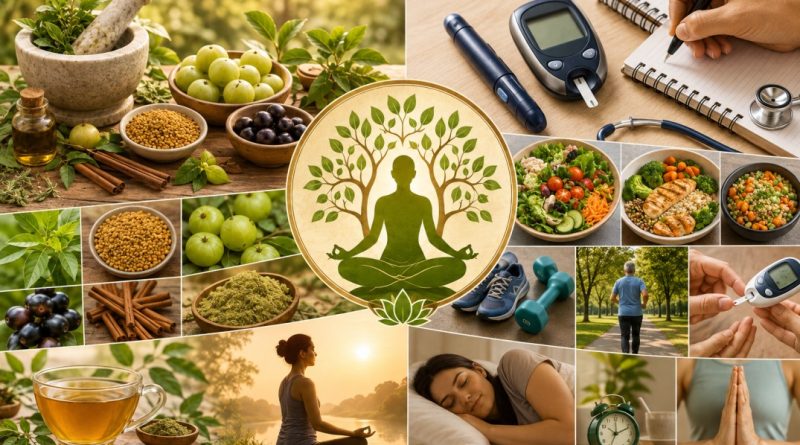
Ayurveda for Diabetes: Diet, Lifestyle & Daily Habits
A Classical Shloka-Based Guide to Prameha & Madhumeha
Diabetes requires lifelong attention to nutrition, physical activity, sleep, body weight, medicines when prescribed, and regular monitoring. Ayurveda discusses diabetes-related presentations within the broader classical concept of Prameha, with Madhumeha being one important form.
Ayurvedic management is not based on a single “sugar-lowering” herb. Classical principles give considerable importance to Ahara (diet), Vihara (lifestyle), Vyayama (exercise), Agni (digestion and metabolism), appropriate body weight, and individualized treatment.
1. Understanding Prameha in Ayurveda
Ayurvedic texts describe Prameha as a group of disorders characterized particularly by abnormalities in urine along with disturbances involving Dosha, Meda and other bodily tissues.
Charaka describes twenty varieties:
चरक संहिता
प्रमेहा विंशतिः।
Traditionally, these are classified according to predominant Dosha as:
10 Kaphaja Prameha
6 Pittaja Prameha
4 Vataja Prameha
This classification shows that Ayurveda does not consider every person with Prameha identical. Constitution, symptoms, strength, nourishment, lifestyle and stage of disease influence the therapeutic approach.
2. Madhumeha — The Classical Concept
Madhumeha literally contains:
Madhu — honey/sweet
Meha — excessive or abnormal urinary flow
One classical description states:
सुश्रुत संहिता
क्षौद्ररसं मधुमेहिनो मेहति।
Meaning
In Madhumeha, urine is traditionally described as possessing a honey-like quality.
Ancient physicians obviously did not have modern laboratory glucose testing or HbA1c. Their observations were clinical. Modern diabetes should therefore be diagnosed and monitored using contemporary medical testing rather than urine appearance, taste, insects around urine, or other historical observations.
3. Why Does Prameha Develop According to Ayurveda?
One of the most important Ayurvedic passages concerns lifestyle.
चरक संहिता, निदानस्थान
आस्यासुखं स्वप्नसुखं दधीनि ग्राम्यौदकानूपरसाः पयांसि।
नवान्नपानं गुडवैकृतं च प्रमेहहेतुः कफकृच्च सर्वम्॥
Meaning
Classical Ayurveda associates Prameha with habits and foods that promote excessive Kapha and nourishment, including:
- excessive comfort and inactivity,
- excessive sleeping,
- certain heavy foods,
- excessive dairy in susceptible individuals,
- newly harvested grains,
- preparations containing Guda (jaggery), and
- other Kapha-promoting dietary patterns.
The practical message remains relevant:
Sedentary living combined with habitual excess food intake can contribute to metabolic ill health.
This does not mean diabetes is simply caused by eating sugar. Genetics, insulin resistance, pancreatic function, medications, pregnancy, age, body composition and several other factors can contribute to different forms of diabetes.
4. The Importance of Meda
Ayurvedic descriptions of Prameha frequently discuss Meda Dhatu, broadly referring to adipose/fat tissue within the classical tissue framework.
Excess adiposity—particularly visceral abdominal fat—is strongly associated in modern medicine with insulin resistance and type 2 diabetes risk.
This makes sustainable weight management particularly valuable for many people with type 2 diabetes who have overweight or obesity.
The objective, however, is metabolic health rather than simply becoming thin.
5. Ayurveda Gives Special Importance to Exercise
One of Ayurveda’s strongest lifestyle recommendations is Vyayama—appropriate physical exercise.
अष्टाङ्गहृदय, सूत्रस्थान
लाघवं कर्मसामर्थ्यं दीप्तोऽग्निर्मेदसः क्षयः।
विभक्तघनगात्रत्वं व्यायामादुपजायते॥
Meaning
Appropriate exercise promotes:
लाघवम् — lightness
कर्मसामर्थ्यम् — greater capacity for activity
दीप्तोऽग्निः — healthy digestive/metabolic function
मेदसः क्षयः — reduction of excessive Meda
विभक्तघनगात्रत्वम् — improved firmness and conditioning of the body
This is especially relevant to metabolic health.
6. Exercise for Diabetes: A Practical Approach
For many adults with diabetes, a reasonable modern goal is approximately 150 minutes or more of moderate-intensity aerobic activity each week, together with resistance exercise on multiple days where medically appropriate.
Examples include:
Brisk walking
Cycling
Swimming
Yoga
Resistance training
Body-weight exercises
Breaking up long periods of sitting can also be helpful.
Even a short walk after meals can be a practical way of incorporating movement into the day.
People taking insulin or medicines capable of causing hypoglycemia may need individualized guidance regarding exercise, glucose monitoring and carbohydrate intake.
7. Ayurveda Also Warns Against Excessive Exercise
More exercise is not automatically better.
Ayurveda emphasizes Bala—individual strength and capacity.
Someone who is elderly, underweight, recovering from illness, experiencing diabetic complications, or otherwise physically vulnerable should not undertake strenuous exercise simply because Vyayama is recommended.
The correct principle is:
यथाबल व्यायाम
Exercise according to one’s capacity.
Consistency is more valuable than occasional extreme exertion.
8. Ahara — Diet Is Central to Prameha Management
Ayurvedic texts place considerable importance on Pathya Ahara—food appropriate to the condition and individual.
For modern diabetes, the most useful interpretation is a dietary pattern that supports:
stable glucose management, adequate nutrition, appropriate energy intake, cardiovascular health and sustainable body weight.
There is no single “Ayurvedic diabetes diet” appropriate for everyone.
9. Barley — Yava in Classical Prameha Diet
Among foods discussed prominently in classical Prameha management is Yava (barley).
Classical Ayurvedic Principle
यवप्रधान आहारः
Traditional Prameha management frequently emphasizes dietary preparations centered on Yava.
Barley provides dietary fiber, including beta-glucan. When appropriate for the individual, whole barley can form part of a balanced diet.
However, portion size still matters because barley contains carbohydrates.
A food does not become unlimited merely because Ayurveda describes it as Pathya.
10. Pulses and Legumes
Traditional dietary discussions also include several pulses.
Examples commonly used in an Ayurvedic-inspired balanced diet include:
Mudga — green gram / mung
Chanaka — chickpea
Masura — lentil
Pulses provide fiber and plant protein and generally produce a different glycemic response from many highly refined carbohydrate foods.
They can be combined with vegetables and appropriately portioned grains to create satisfying meals.
11. Vegetables Should Occupy a Major Place
A diabetes-friendly Ayurvedic meal can emphasize non-starchy vegetables such as:
- leafy greens,
- gourds,
- cauliflower,
- cabbage,
- okra,
- cucumber,
- beans,
- brinjal/eggplant,
- capsicum, and
- other seasonal vegetables.
A practical plate method is:
½ plate — non-starchy vegetables
¼ plate — protein
¼ plate — whole grains or another appropriate carbohydrate source
Individual carbohydrate requirements vary, particularly for people using insulin.
12. What About Rice and Roti?
People with diabetes do not necessarily have to eliminate all rice or roti.
The important factors include:
type of grain + portion size + total carbohydrate + accompanying foods + individual glucose response.
Large portions of refined grains can raise blood glucose rapidly.
Where appropriate, consider whole grains, higher-fiber alternatives, vegetables and adequate protein while controlling portions.
Monitoring glucose responses can help determine what works for an individual.
13. Sugar, Jaggery and Honey
This is particularly important in an Ayurvedic article.
Jaggery is sugar.
Honey contains free sugars.
Brown sugar is still sugar.
Replacing white sugar with jaggery or honey does not make a sweet preparation automatically suitable for diabetes.
Ayurvedic texts discuss honey and other substances within particular therapeutic contexts, but that should not be converted into advice to consume unlimited quantities.
For diabetes management, total carbohydrate and free-sugar intake still matter.
14. Fruits and Diabetes
Fruit does not necessarily need to be eliminated.
Whole fruits provide fiber, vitamins and other nutrients.
Prefer whole fruit rather than fruit juice.
Suitable portions may include foods such as:
Guava
Apple
Orange
Pear
Papaya
Berries where available
The appropriate quantity depends on the individual’s glucose response, medication regimen and overall diet.
Fruit juice can deliver carbohydrate rapidly and generally lacks the intact fiber structure of whole fruit.
15. Gudmar — गुडमार
Gudmar (Gymnema sylvestre) is one of the herbs frequently associated with glucose management in Ayurvedic practice.
Its popular name is sometimes interpreted as “sugar destroyer.”
That name should not be misunderstood.
Gudmar is not a replacement for insulin or prescribed diabetes medication.
Some evidence suggests potential effects on glucose metabolism, but dosing, preparation quality, medication interactions and the individual’s health status matter.
Combining glucose-lowering herbs with diabetes medicines may increase the risk of excessively low blood glucose.
16. Methi — Fenugreek
Methi (Trigonella foenum-graecum) is both a food and a traditional medicinal ingredient.
Fenugreek seeds contain soluble fiber and have been studied for possible effects on glycemic control.
They can be incorporated into food in reasonable culinary amounts.
Therapeutic doses or concentrated extracts require greater caution, particularly when someone is already taking glucose-lowering medicines.
17. Vijayasara
Vijayasara (Pterocarpus marsupium) has a long history of use in Ayurvedic approaches to Prameha.
Traditional practices sometimes involve water stored in vessels made from Vijayasara wood.
While the plant has attracted scientific interest, it should not be advertised as a guaranteed cure for diabetes.
A person with high glucose should not replace established medical therapy with Vijayasara water.
18. Amla — Amalaki
Amalaki (Phyllanthus emblica) is extensively used in Ayurveda.
Fresh amla can form part of a nutritious dietary pattern.
The important distinction is between:
fresh unsweetened amla
and
amla candy, murabba or sweetened juice.
A product containing large amounts of added sugar is not automatically diabetes-friendly merely because its primary ingredient is Ayurvedic.
19. Turmeric — Haridra
Haridra (turmeric) has a long history in Ayurvedic diet and medicine.
Turmeric can be incorporated into everyday cooking.
However, consuming large quantities of turmeric or concentrated curcumin supplements should not be viewed as a substitute for diabetes treatment.
Supplement doses may also interact with medicines or be inappropriate for certain individuals.
20. Jamun
Jambu/Jamun (Syzygium cumini) is traditionally discussed in relation to Prameha.
The fruit can be consumed as part of an appropriate diet when available.
Jamun seed powders are also marketed widely for diabetes, but herbal powders should not be assumed to have predictable potency or purity.
Again:
Food can support treatment. It does not replace treatment.
21. Bitter Foods and Karela
Bitter gourd (Karela) is frequently recommended in traditional dietary practice.
It can be eaten as a vegetable.
However, extremely concentrated bitter-gourd juices or extracts are unnecessary for most people and may interact with glucose-lowering treatment.
A balanced meal is more important than relying on one “anti-diabetic” vegetable.
22. Dinacharya — Daily Routine
Ayurveda gives enormous importance to Dinacharya, or an orderly daily routine.
A useful diabetes-supportive routine could look like this:
Morning
Wake at approximately the same time each day.
Hydrate according to thirst.
Complete a few minutes of gentle breathing, meditation or mobility work.
Exercise according to individual capacity.
Check blood glucose when advised by your healthcare team.
Take prescribed medication at the correct time.
Breakfast
Choose a meal containing protein, fiber and minimally processed foods.
Avoid making sweetened tea, biscuits, sugary cereal, juice or refined bakery products the foundation of breakfast.
Lunch
Build a balanced meal around:
vegetables + protein/pulses + controlled portions of carbohydrate.
Afternoon
Avoid remaining seated continuously for several hours.
Take short movement breaks where practical.
Dinner
Keep portions appropriate and avoid habitual overeating late at night.
After Dinner
A gentle walk can be useful for many people when medically appropriate.
Bedtime
Take medicines as prescribed and aim for a regular sleep schedule.
23. Sleep Is Part of Metabolic Health
Ayurveda regards sleep—Nidra—as a fundamental component of health.
One classical teaching describes food, sleep and regulated conduct as important supports of life.
अष्टाङ्गहृदय
आहारः स्वप्नो ब्रह्मचर्यमिति त्रयोपस्तम्भाः।
Meaning
Food, appropriate sleep and regulated conduct are described as major supporting pillars of life.
For most adults, approximately 7–9 hours of quality sleep is a reasonable goal.
Poor sleep can affect appetite, insulin sensitivity, stress, energy and food choices.
24. Stress Management
Diabetes is not merely a matter of food.
Psychological stress can influence sleep, eating patterns, physical activity and glucose levels.
Useful complementary practices include:
Meditation
Pranayama
Yoga
Walking
Relaxation exercises
Regular sleep
Time outdoors
These practices support diabetes management but do not replace medication where medication is necessary.
25. Yoga and Pranayama
Yoga can contribute to physical activity, flexibility, strength and stress management.
A gentle program may include:
Tadasana
Trikonasana
Bhujangasana
Setu Bandhasana
Vakrasana or appropriate gentle twists
Surya Namaskar according to capacity
Meditation and gentle pranayama
No particular yoga posture should be claimed to “cure diabetes.”
The benefit comes from integrating movement, fitness and stress management into a sustainable lifestyle.
26. Weight Management and Type 2 Diabetes
For people with type 2 diabetes who have overweight or obesity, clinically meaningful weight loss can substantially improve metabolic health.
Ayurveda provides an important classical verse regarding exercise:
लाघवं कर्मसामर्थ्यं दीप्तोऽग्निर्मेदसः क्षयः।
It emphasizes Meda Kshaya—reduction of excessive Meda—as one benefit of appropriate physical activity.
The safest modern approach combines:
portion awareness + nutritious food + adequate protein + fiber + exercise + resistance training + sleep + medical treatment where needed.
27. What About Fasting?
Ayurveda uses Langhana as a therapeutic principle, but Langhana should not automatically be translated as prolonged fasting.
For someone taking insulin or glucose-lowering medication, fasting without adjusting treatment can produce hypoglycemia or, in some situations, dangerous hyperglycemia.
Therefore:
Do not undertake aggressive fasting for diabetes without appropriate medical supervision.
28. Ayurvedic Medicines Require Individualization
Classical Ayurveda does not prescribe exactly the same treatment to every patient with Prameha.
A practitioner considers factors such as:
Dosha
Dushya
Bala
Agni
Prakriti
Age
Disease stage
Associated conditions
This individualized principle is important.
Buying a bottle labelled “Ayurvedic diabetes cure” is not equivalent to receiving individualized Ayurvedic treatment.
29. Never Stop Diabetes Medicine Suddenly
This is one of the most important safety points.
If blood glucose improves after dietary changes, weight loss, exercise or complementary Ayurvedic treatment, do not independently reduce or stop insulin or medication.
Medication requirements sometimes change when glucose control improves, but adjustments should be made with the healthcare professional managing the diabetes.
Abruptly stopping treatment can lead to severe hyperglycemia and potentially dangerous complications.
30. Watch for Hypoglycemia
People using insulin or certain glucose-lowering medicines should know the symptoms of low blood glucose.
Possible symptoms include:
- sweating,
- trembling,
- sudden hunger,
- dizziness,
- palpitations,
- weakness,
- confusion, and
- unusual behavior.
Severe hypoglycemia can cause seizures or loss of consciousness and requires urgent treatment.
Adding multiple glucose-lowering herbs to prescription treatment can make glucose management less predictable.
31. Monitoring Is Essential
Ayurvedic lifestyle care should complement—not replace—objective monitoring.
Depending on the individual’s diabetes type and treatment, clinicians may recommend monitoring:
Blood glucose
HbA1c
Blood pressure
Cholesterol/lipids
Kidney function
Body weight and waist circumference
Regular eye examinations and foot assessments are also important for many people living with diabetes.
32. A Classical Definition of Health
Ayurveda’s objective extends beyond simply lowering a glucose reading.
The Sushruta Samhita gives one of Ayurveda’s best-known definitions of health:
सुश्रुत संहिता
समदोषः समाग्निश्च समधातुमलक्रियः।
प्रसन्नात्मेन्द्रियमनाः स्वस्थ इत्यभिधीयते॥
Meaning
A healthy person is described as one whose Dosha, Agni, Dhatu and elimination processes are appropriately balanced and whose self, senses and mind remain in a pleasant state.
This provides an important perspective for diabetes care.
The goal should not be only a better laboratory number.
The broader objectives include:
healthy glucose levels, cardiovascular health, physical fitness, adequate nutrition, healthy body composition, good sleep, psychological well-being and prevention of complications.
33. Simple Ayurvedic-Inspired Diabetes Checklist
- Eat predominantly minimally processed foods.
- Include plenty of non-starchy vegetables.
- Include adequate protein with meals.
- Control portions of rice, roti and other carbohydrate foods.
- Prefer whole fruit over fruit juice.
- Limit sweets, sugary drinks and refined snacks.
- Remember that honey and jaggery also contain sugar.
- Exercise regularly according to your capacity.
- Break up prolonged periods of sitting.
- Consider gentle walking after meals.
- Maintain a consistent sleep schedule.
- Practice stress-management techniques.
- Take diabetes medicines exactly as prescribed.
- Monitor glucose and HbA1c as recommended.
- Use medicinal herbs only with appropriate professional guidance.
- Never replace insulin with herbs.
Conclusion
Ayurveda’s approach to Prameha and Madhumeha is fundamentally broader than taking an herbal preparation to lower blood sugar.
One of its most useful classical observations is the association between Prameha and an excessively sedentary, over-nourishing lifestyle:
आस्यासुखं स्वप्नसुखं… प्रमेहहेतुः कफकृच्च सर्वम्॥
At the same time, Ayurveda emphasizes the benefits of appropriate exercise:
लाघवं कर्मसामर्थ्यं दीप्तोऽग्निर्मेदसः क्षयः।
विभक्तघनगात्रत्वं व्यायामादुपजायते॥
And its broader definition of health reminds us that successful treatment involves more than controlling one number:
समदोषः समाग्निश्च समधातुमलक्रियः।
प्रसन्नात्मेन्द्रियमनाः स्वस्थ इत्यभिधीयते॥
For a modern reader, the most responsible synthesis is therefore:
Eat appropriately. Move regularly. Maintain a healthy body weight. Sleep adequately. Manage stress. Monitor glucose. Take prescribed treatment. Use Ayurvedic medicines cautiously and individually.
Ayurveda can provide valuable dietary and lifestyle principles, but diabetes—especially when blood glucose is substantially elevated—requires appropriate medical diagnosis, monitoring and treatment.
Disclaimer: This article is for educational purposes and is not a substitute for individualized medical care. People with diabetes should continue prescribed medication and monitoring. Insulin must never be stopped or replaced with herbs without medical supervision. Pregnant people, children, people with type 1 diabetes, kidney or liver disease, or anyone experiencing severe hyperglycemia or recurrent hypoglycemia require individualized professional care. Classical Sanskrit wording and numbering can vary between editions and recensions; consult a critical edition of the relevant Ayurvedic text when using shlokas for academic or clinical publication.