Health History: The Evolution of Healthcare from Ancient Times to Modern Medicine
The history of healthcare is a story of human curiosity, observation, innovation and the desire to prevent and treat disease. From ancient herbal remedies and traditional healing systems to artificial intelligence, advanced surgery and modern laboratories, healthcare has changed dramatically over thousands of years.
🏺 Ancient Healthcare
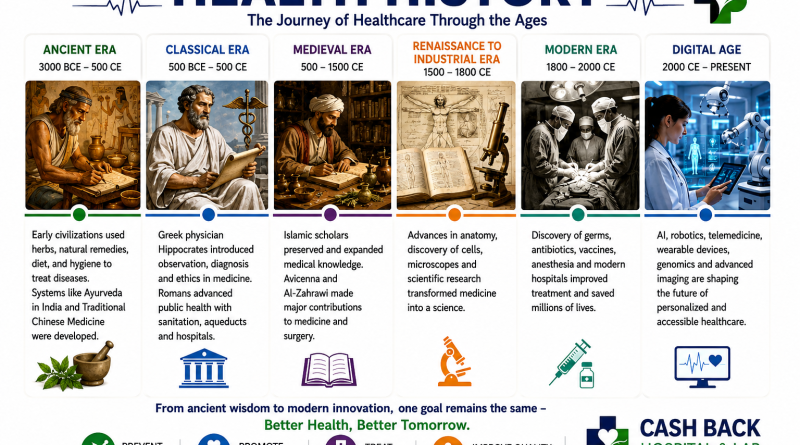
Early civilizations used plants, herbs, minerals, diet, hygiene and traditional healing practices to manage illness. Ancient Egypt, India, China, Greece and Rome all developed organized approaches to health and medicine.
Ancient Indian civilization also had important traditions of sanitation, hygiene and medical care. Ayurveda developed as a major Indian medical tradition, with important contributions from physicians such as Charaka and Sushruta.
🌿 Ayurveda and Traditional Medicine
Ayurveda developed a holistic approach that considered diet, lifestyle, herbs and other practices as part of maintaining health.
Ancient Indian medical literature also addressed areas such as surgery, anatomy, medicines and prevention. Sushruta is particularly associated with early surgical knowledge.
🏛️ Greek and Roman Medicine
Ancient Greek medicine helped move healthcare toward systematic observation of symptoms and disease. Hippocrates and the Hippocratic tradition emphasized observation and natural explanations of illness rather than relying solely on supernatural explanations.
Roman medicine also contributed to public health. Aqueducts, sewer systems and public bathing facilities demonstrated the importance of sanitation and population health.
📚 The Islamic Golden Age
Between approximately the 8th and 14th centuries, scholars in the Islamic world preserved, translated and expanded medical knowledge from Greek, Roman, Persian and Indian traditions.
Physicians such as Avicenna (Ibn Sina) and Al-Zahrawi made important contributions to medical education, clinical practice and surgery. Their works later influenced medical learning in Europe.
🔬 The Scientific Revolution
From the Renaissance onward, advances in anatomy, physiology, chemistry and scientific observation gradually transformed medicine.
The discovery of cells, microorganisms and genes provided new ways of understanding how the human body works and how diseases develop.
🦠 The Rise of Modern Medicine
The 19th century brought major changes to healthcare. Scientific research increasingly demonstrated the role of microorganisms in infectious disease.
Better understanding of infection, hygiene, anesthesia, surgery and medical education helped transform healthcare. The development of antibiotics and advances in genetics and molecular biology further changed medicine during the 20th century.
💉 Vaccination and Disease Prevention
Healthcare gradually shifted from treating disease after it occurred toward prevention and public health.
Vaccination, sanitation, clean water, nutrition, health education and disease surveillance became important tools for protecting communities.
🏥 Modern Hospitals and Laboratories
Modern healthcare now depends on a large network of hospitals, laboratories, pharmacies, imaging centres, emergency services and specialized healthcare professionals.
Laboratory testing, medical imaging and digital health records allow healthcare professionals to gather information that supports diagnosis and treatment.
🤖 The Digital Age
Today, healthcare is entering another major period of transformation.
Modern technologies include:
- Artificial intelligence
- Robotic surgery
- Telemedicine
- Wearable health devices
- Advanced medical imaging
- Genetic testing
- 3D printing
- Remote patient monitoring
- Digital health records
- Advanced laboratory diagnostics
These technologies are helping healthcare professionals detect, diagnose and manage diseases in increasingly sophisticated ways.
🌍 From Individual Treatment to Public Health
The concept of health has also changed. Healthcare is no longer focused only on treating an individual who is sick. Modern public health also emphasizes prevention, sanitation, nutrition, physical activity, mental well-being and healthy environments.
The Future of Healthcare
The history of healthcare shows that medical knowledge is constantly evolving. The future is likely to combine scientific research, human expertise, traditional knowledge where evidence supports its use, digital technology and personalized medicine.
The ultimate goal remains the same:
To prevent disease, reduce suffering, improve quality of life and help people live healthier lives.
Cash Back Hospital & Lab
Cash Back Hospital & Lab believes that understanding the history of healthcare helps us appreciate how far medicine has come—and why continued research, innovation and health awareness are important for the future.
Your Health. Your Care. Your Savings.
Disclaimer: This article is for general educational purposes only and does not replace professional medical advice, diagnosis or treatment.