
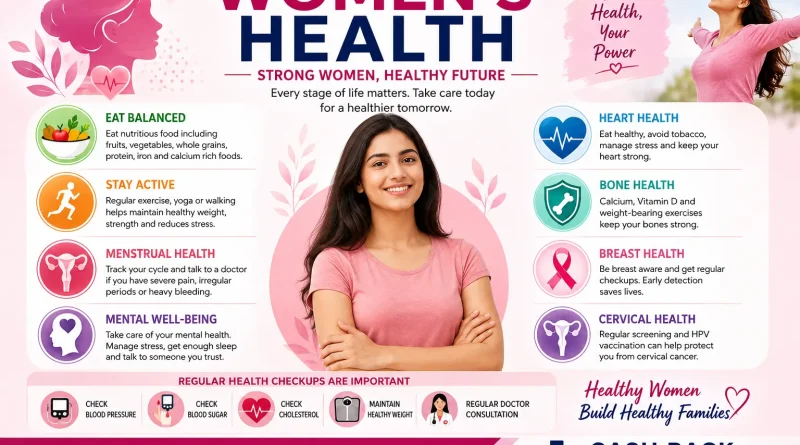
Women’s Health: Essential Tips for Every Stage of Life
Women’s health is an important part of family and community well-being. A woman’s healthcare needs can change throughout life, from adolescence and reproductive years to pregnancy, menopause and older age.
Taking care of health through nutrition, physical activity, preventive checkups and timely medical care can help women maintain well-being throughout life.
1. Eat a Balanced Diet
A nutritious diet should provide adequate protein, fiber, vitamins and minerals.
Include:
- Green leafy vegetables
- Seasonal fruits
- Whole grains
- Pulses and beans
- Eggs, fish or other protein sources
- Nuts and seeds
- Healthy fats
Iron, calcium and vitamin D are particularly important for many women, although individual nutritional needs vary.
2. Stay Physically Active
Regular physical activity supports heart health, muscle strength, bone health and mental well-being.
Walking, strength training, yoga, swimming, cycling and other suitable activities can be incorporated into a healthy routine.
3. Pay Attention to Menstrual Health
Menstrual patterns can provide useful information about overall health.
Women should discuss significant changes such as:
- Very heavy bleeding
- Persistent severe menstrual pain
- Very irregular periods
- Periods stopping unexpectedly
- Bleeding between periods
with a qualified healthcare professional.
4. Take Care of Heart Health
Heart disease can affect women too. Maintaining a healthy weight, staying active, avoiding tobacco, eating a balanced diet and monitoring blood pressure and other risk factors can support cardiovascular health.
5. Protect Bone Health
Bone health becomes increasingly important as women age.
Adequate calcium and vitamin D, regular weight-bearing activity and strength training can help support strong bones. Women with specific risk factors for osteoporosis should discuss screening with their healthcare professional.
6. Prioritize Mental Health
Stress, anxiety, depression and other mental health concerns can affect women at any stage of life.
Talking to a trusted person and seeking professional support when needed are important steps toward better mental well-being.
7. Pregnancy and Maternal Health
Women planning pregnancy should consider discussing nutrition, medicines, vaccinations and existing health conditions with a healthcare professional.
During pregnancy, regular prenatal care is important for monitoring the health of both mother and baby.
8. Breast Health
Women should be familiar with how their breasts normally look and feel and report unusual changes to a healthcare professional.
Changes such as a new lump, unusual nipple discharge, skin changes or persistent breast pain should be evaluated.
Appropriate breast-cancer screening depends on age, personal risk and national recommendations.
9. Cervical Health
Cervical cancer screening can help detect precancerous changes before they develop into cancer.
Women should discuss the appropriate screening schedule and HPV vaccination with their healthcare professional according to local recommendations.
10. Menopause and Healthy Aging
Menopause is a natural stage of life. Symptoms can include hot flashes, sleep changes, mood changes and vaginal symptoms.
Women experiencing troublesome symptoms should discuss them with a healthcare professional because effective treatment and management options may be available.
11. Get Appropriate Health Checkups
Preventive healthcare may include monitoring:
- Blood pressure
- Blood sugar
- Cholesterol
- Weight and body health
- Mental well-being
- Reproductive health
- Age-appropriate cancer screening
The right tests and frequency depend on age, medical history and individual risk factors.
Make Women's Health a Priority
Women should not ignore persistent symptoms or postpone necessary healthcare. Early attention to health concerns can support better outcomes and quality of life.
Eat well. Stay active. Get appropriate checkups. Know your body. Seek medical advice when something changes.
Cash Back Hospital & Lab
Cash Back Hospital & Lab is committed to sharing useful health information to help women and families make informed healthcare decisions.
Your Health. Your Care. Your Savings.
Disclaimer: This article is for general educational purposes only and does not replace professional medical advice, diagnosis or treatment.