Turmeric/Curcumin: Anti-Inflammatory Benefits & Limitations
Ayurvedic Uses, Modern Evidence, Arthritis, Metabolic Health, Dosage, Bioavailability & Safety

Turmeric (Haridra; Curcuma longa) is one of the best-known medicinal plants in Ayurveda and one of the most researched herbal products in modern complementary medicine.
Its yellow pigments include a group of compounds called curcuminoids, of which curcumin is the best known.
Turmeric and curcumin are frequently described online as powerful “natural anti-inflammatory” agents capable of treating everything from arthritis and diabetes to cancer and Alzheimer's disease.
The evidence is more nuanced.
Curcumin has biologically plausible anti-inflammatory activity, and human research suggests useful benefits for some conditions—particularly symptomatic knee osteoarthritis—but it is not a universal anti-inflammatory medicine or a cure for chronic disease.
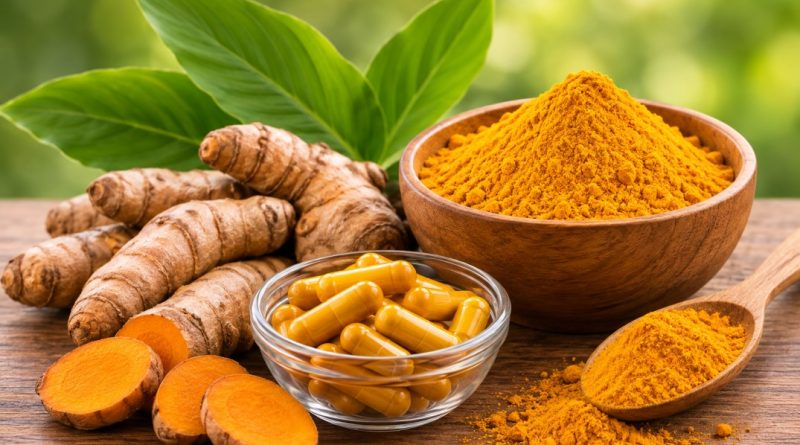
1. Turmeric vs Curcumin: They Are Not the Same
This distinction is essential.
Turmeric
The whole rhizome of Curcuma longa, used as a food, spice and traditional medicine.
Curcumin
One of several naturally occurring curcuminoids found in turmeric.
Curcumin extract
A concentrated supplement that may contain much higher amounts of curcuminoids than culinary turmeric.
Therefore:
Turmeric in food ≠ turmeric powder used medicinally ≠ standardized curcumin extract.
Research on one cannot automatically be applied to all three.
2. Turmeric in Ayurveda
Turmeric is known primarily as Haridra (हरिद्रा) in Ayurveda.
It has a long history of internal and external use within traditional Ayurvedic practice.
Classical descriptions commonly include:
Rasa
Tikta and Katu
Guna
Laghu and Ruksha
Virya
Generally described as Ushna
Vipaka
Katu
These are traditional Ayurvedic pharmacological categories, not equivalents of modern molecular pharmacology.
3. Traditional Uses of Haridra
Classical and traditional applications include contexts involving:
- Skin disorders
- Wounds
- Kapha-associated conditions
- Metabolic disorders
- Inflammatory-type presentations
- Digestive complaints
However, historical use does not by itself prove effectiveness for modern diagnoses.
4. What Does “Anti-Inflammatory” Actually Mean?
Inflammation is not inherently bad.
It is an essential biological response involved in:
- Fighting infection
- Healing injuries
- Tissue repair
- Immune defence
The problem arises when inflammatory processes become excessive, inappropriate or chronic.
Therefore:
The goal is not to “remove all inflammation.”
That would be biologically undesirable.
5. How Might Curcumin Work?
Laboratory studies suggest curcumin can influence multiple signalling pathways associated with inflammation and oxidative stress.
These include pathways involving:
- NF-κB
- Cytokines
- COX-related signalling
- Oxidative pathways
- Cellular transcription mechanisms
But laboratory activity does not automatically mean meaningful clinical benefit.
A molecule affecting an inflammatory pathway in a test tube is not the same as proving that it treats disease in humans.
6. Curcumin and Knee Osteoarthritis
This is currently one of the strongest areas of clinical evidence.
Multiple randomized trials and meta-analyses suggest certain turmeric or curcumin preparations may modestly improve:
- Knee pain
- Stiffness
- Physical function
in people with knee osteoarthritis.
Evidence assessment:
🟢 Moderate/promising
This makes osteoarthritis one of the more reasonable evidence-based uses of standardized turmeric/curcumin products.
7. Does Curcumin Cure Arthritis?
❌ MYTH
“Curcumin cures osteoarthritis.”
✅ FACT
Some preparations may reduce symptoms.
There is insufficient evidence that curcumin:
- Regrows cartilage
- Reverses structural joint damage
- Permanently cures osteoarthritis
Symptom improvement and disease reversal are very different claims.
8. Curcumin vs Painkillers
Some trials have compared curcumin preparations with NSAIDs and reported similar symptom improvement in selected participants.
However, this does not establish that curcumin universally replaces:
- Ibuprofen
- Naproxen
- Diclofenac
- Other prescribed therapies
Study preparations, doses and populations vary considerably.
Treatment should be individualized.
9. Turmeric for Rheumatoid Arthritis
Small studies have explored curcumin in rheumatoid arthritis.
Some results are encouraging.
However, evidence remains inadequate to replace disease-modifying antirheumatic drugs (DMARDs).
This distinction is critical.
Rheumatoid arthritis can cause irreversible joint damage if inadequately treated.
Curcumin should never be used as a reason to delay rheumatological treatment.
10. Curcumin and Muscle Soreness
Some studies suggest curcumin supplementation may modestly reduce:
- Exercise-induced muscle soreness
- Markers associated with exercise-related inflammation
The evidence is promising but variable.
Evidence assessment:
🟡 Promising
Proper recovery still depends primarily on:
- Training load
- Sleep
- Nutrition
- Protein intake
- Rest
11. Curcumin and Metabolic Health
Researchers have investigated curcumin for:
- Insulin resistance
- Blood glucose
- Lipids
- Metabolic syndrome
- Obesity-associated inflammation
Some meta-analyses report modest improvements in selected biomarkers.
However, results vary substantially according to:
- Population
- Formulation
- Dose
- Duration
- Baseline metabolic health
Evidence assessment:
🟡 Promising but not definitive
12. Curcumin and Diabetes
Curcumin should not be marketed as a cure for diabetes.
Even if a supplement modestly improves glucose-related markers:
It does not replace:
- Healthy nutrition
- Physical activity
- Weight management when appropriate
- Blood glucose monitoring
- Prescribed medication
People taking glucose-lowering medicines should also consider potential additive effects.
13. Curcumin and Cholesterol
Some studies report modest improvements in:
- LDL cholesterol
- Triglycerides
- Other lipid markers
But evidence is inconsistent.
Curcumin should not replace statins or other lipid-lowering treatment when those medicines are clinically indicated.
14. Turmeric and Fatty Liver
Curcumin has been investigated in people with metabolic fatty liver disease.
Some trials report improvements in:
- Liver enzymes
- Metabolic markers
- Imaging-related outcomes
But formulations and study quality vary.
Evidence assessment:
🟡 Promising, but insufficient as standalone treatment
Weight management, physical activity and metabolic risk-factor control remain fundamental.
15. Curcumin and Inflammatory Bowel Disease
Curcumin has been studied as an adjunct in conditions such as ulcerative colitis.
Some studies suggest possible benefit when used alongside conventional treatment.
However:
It should not replace prescribed IBD therapy.
Uncontrolled inflammatory bowel disease can cause serious complications.
16. Curcumin and Depression
Because inflammatory pathways have been investigated in depression, curcumin has also been studied for mood disorders.
Some trials and meta-analyses report improvements in depressive symptoms.
But study sizes are generally modest, and formulations vary.
Evidence assessment:
🟡 Promising but insufficient as replacement therapy
17. Curcumin and Brain Health
Curcumin is frequently marketed for:
- Memory
- Cognitive decline
- Alzheimer's disease prevention
Human evidence remains limited.
❌ There is currently no convincing evidence that turmeric cures or reverses Alzheimer's disease.
Laboratory findings should not be converted into clinical cure claims.
18. Turmeric and Cancer
This is an area where misinformation is especially common.
Curcumin has been extensively studied in:
- Cells
- Animals
- Experimental cancer models
But:
Curcumin is not an established standalone cancer treatment.
Cancer patients should never delay surgery, chemotherapy, radiotherapy, immunotherapy or other indicated treatment because of turmeric supplements.
Supplement use should also be discussed with the oncology team because interactions may occur.
19. “Turmeric Kills Cancer Cells”
❌ MISLEADING CLAIM
Many substances can damage cancer cells in laboratory conditions.
The clinically relevant questions are:
- Can effective concentrations safely reach human tumours?
- Does treatment improve survival?
- Does it improve clinically meaningful outcomes?
- Is it safe alongside cancer treatment?
Laboratory activity alone cannot answer these questions.
20. Curcumin and Cardiovascular Health
Some research suggests possible effects on:
- Endothelial function
- Lipids
- Oxidative stress
- Inflammatory markers
These findings are interesting but do not justify using curcumin as a replacement for established cardiovascular prevention.
The major priorities remain:
- Blood-pressure control
- Cholesterol management
- Diabetes management
- Exercise
- Healthy diet
- Tobacco avoidance
21. Curcumin and CRP
Some meta-analyses report reductions in inflammatory biomarkers such as C-reactive protein (CRP).
This demonstrates potential biological activity.
But:
Lowering a biomarker is not automatically the same as preventing heart attacks, disability or death.
Clinical outcomes matter more than laboratory numbers alone.
22. The Bioavailability Problem
One major limitation of curcumin is:
Poor oral bioavailability.
Curcumin is:
- Poorly absorbed
- Rapidly metabolized
- Rapidly eliminated
This is why modern supplement manufacturers use various strategies to increase absorption.
23. Curcumin + Black Pepper
Black pepper contains piperine.
Piperine can increase curcumin bioavailability.
This is why many supplements combine:
Curcumin + Piperine
But increased absorption is not automatically beneficial.
Piperine can also affect drug metabolism and potentially alter the absorption or blood concentrations of medications.
24. More Bioavailable ≠ Automatically Safer
This is an important principle.
If a formulation dramatically increases curcumin absorption, it may also change:
- Drug interactions
- Tissue exposure
- Adverse effects
Therefore:
“500 mg highly bioavailable curcumin”
cannot necessarily be compared directly with:
“500 mg ordinary turmeric extract.”
25. Other Curcumin Formulations
Modern products may use:
- Phospholipid complexes
- Micelles
- Nanoparticles
- Liposomal systems
- Essential-oil combinations
- Proprietary absorption technologies
Different formulations may produce very different blood concentrations.
This makes comparison between clinical trials difficult.
26. Turmeric in Food
Culinary turmeric can be part of a healthy diet.
It provides:
- Flavour
- Colour
- Phytochemicals
Using turmeric in:
- Dal
- Vegetables
- Soups
- Curries
- Khichdi
is generally very different from taking concentrated extracts.
27. Does Turmeric Need Black Pepper in Every Meal?
No.
❌ MYTH
“Turmeric is useless unless black pepper is added.”
✅ FACT
Piperine can increase curcumin absorption, but turmeric remains a perfectly valid culinary ingredient without black pepper.
Traditional meals also contain fats and complex food matrices that influence digestion and absorption.
28. Turmeric With Fat
Curcumin is lipophilic, meaning its absorption can be influenced by dietary fat.
Using turmeric as part of a normal meal containing some fat is reasonable.
This does not mean you need large quantities of ghee or oil.
More fat is not automatically better.
29. Golden Milk / Haldi Doodh
Turmeric milk is a traditional household preparation.
It can be:
- Warm
- Comforting
- Nutritious depending on ingredients
But it should not be advertised as a cure for:
- Cancer
- COVID-19
- Arthritis
- Diabetes
- “All inflammation”
Its role should remain realistic.
30. Does Turmeric “Detox” the Body?
❌ MYTH
“Turmeric removes toxins from the liver and blood.”
✅ FACT
The body continuously processes and eliminates substances through organs including the:
- Liver
- Kidneys
- Lungs
- Gastrointestinal tract
Curcumin may influence biological pathways, but this is not equivalent to physically flushing toxins from the body.
31. Turmeric and Immunity
Curcumin has immunomodulatory effects in experimental research.
But:
“Immunomodulatory” ≠ “proven immunity booster.”
There is insufficient evidence that routine curcumin supplementation prevents all infections.
Adequate sleep, vaccination where appropriate, nutrition and general health remain much more important.
32. What Dose Is Used?
There is no single universal curcumin dose because preparations vary enormously.
Clinical trials commonly use standardized curcuminoid preparations ranging from several hundred milligrams to over a gram daily.
But:
Milligrams alone are misleading.
You must know:
- Curcuminoid concentration
- Extract type
- Bioavailability technology
- Piperine content
- Clinical indication
33. Turmeric Powder vs Curcumin Capsules
Suppose someone consumes:
1 teaspoon turmeric powder
and another person takes:
500 mg standardized curcumin extract.
These exposures are not equivalent.
Whole turmeric contains only a fraction of its weight as curcuminoids.
Concentrated extracts can provide substantially greater exposure.
34. How Long Is It Usually Studied?
Many clinical studies run for approximately:
4–12 weeks
although durations vary.
Long-term safety information is less extensive than short-term trial data.
Therefore, concentrated supplements should not automatically be taken indefinitely.
35. Common Side Effects
Turmeric/curcumin supplements can cause:
- Nausea
- Abdominal discomfort
- Diarrhoea
- Reflux
- Headache in some people
Higher doses may increase gastrointestinal problems.
36. Curcumin and Liver Injury
Although turmeric is widely perceived as liver-protective, concentrated turmeric/curcumin supplements have also been associated with rare cases of liver injury.
Some reports involve products formulated for enhanced absorption.
This does not mean culinary turmeric damages the liver.
It means:
Concentrated supplements deserve appropriate safety monitoring.
37. Liver Warning Signs
Stop the supplement and seek medical assessment if symptoms such as:
- Yellow skin or eyes
- Dark urine
- Severe itching
- Persistent nausea
- Significant abdominal discomfort
- Unusual fatigue
appear after starting a turmeric/curcumin supplement.
38. Gallbladder Disease
Turmeric/curcumin can influence bile-related physiology.
People with:
- Gallstones
- Biliary obstruction
- Significant gallbladder disease
should seek professional advice before using concentrated medicinal doses.
Culinary amounts are a different issue.
39. Bleeding and Anticoagulants
Curcumin may potentially affect platelet or coagulation-related pathways.
Particular caution is appropriate with medicines such as:
- Warfarin
- Apixaban
- Rivaroxaban
- Clopidogrel
- Aspirin
depending on clinical circumstances.
Tell your clinician about supplement use.
40. Before Surgery
Because of potential effects on:
- Bleeding
- Glucose
- Drug metabolism
supplement use should be disclosed before surgery.
The surgical team can advise when concentrated curcumin products should be stopped.
41. Diabetes Medicines
Curcumin may influence glucose in some individuals.
Combining it with glucose-lowering medicines could theoretically contribute to excessive glucose lowering.
People with diabetes should monitor glucose appropriately.
42. Iron Absorption
Curcumin can bind iron under experimental conditions, and there are concerns that high-dose supplementation may affect iron availability in susceptible individuals.
People with:
- Iron deficiency
- Iron-deficiency anaemia
should be cautious with prolonged high-dose supplementation.
43. Kidney Stones
Turmeric contains oxalates.
Very high intake of turmeric powder may increase urinary oxalate exposure in susceptible people.
Individuals with recurrent calcium oxalate kidney stones should discuss high-dose turmeric use with an appropriate healthcare professional.
44. Pregnancy
Culinary turmeric as part of food is different from high-dose medicinal supplementation.
Safety data for concentrated curcumin supplements during pregnancy are insufficient.
Routine high-dose supplementation should therefore not be assumed safe.
45. Product Quality Matters
A quality supplement should clearly state:
- Curcuma longa
- Plant part used
- Extract type
- Curcuminoid concentration
- Dose per serving
- Added piperine or absorption enhancer
- Manufacturer
- Batch information
- Appropriate quality testing
Avoid products promising:
“100% cure,” “zero side effects,” or “works for every inflammatory disease.”
46. Evidence Summary
| Claimed Use | Evidence |
|---|---|
| Knee osteoarthritis symptoms | 🟢 Moderate/promising |
| General joint pain | 🟡 Promising |
| Exercise-related soreness | 🟡 Promising |
| Metabolic syndrome markers | 🟡 Promising |
| Blood glucose | 🟡 Limited/promising |
| Lipids | 🟡 Limited/promising |
| Fatty liver | 🟡 Promising but preliminary |
| Ulcerative colitis adjunct | 🟡 Promising |
| Depressive symptoms | 🟡 Promising |
| Cardiovascular biomarkers | 🟡 Limited/promising |
| Alzheimer's treatment | 🔴 Insufficient |
| Cancer treatment | 🔴 Not established |
| Weight-loss treatment | 🔴 Insufficient |
| Universal immunity boosting | 🔴 Insufficient |
| “Detoxification” | 🔴 Unsupported as commonly marketed |
47. Turmeric/Curcumin: Myths vs Facts
| MYTH | FACT |
|---|---|
| Turmeric cures inflammation | Inflammation is a biological process, not one disease |
| Curcumin cures arthritis | It may modestly reduce OA symptoms |
| Turmeric regrows cartilage | Not established |
| Curcumin replaces rheumatoid arthritis medicines | It should not replace DMARDs |
| Turmeric cures cancer | Not established |
| Curcumin prevents Alzheimer's | Evidence is insufficient |
| Black pepper is always necessary | It increases absorption but isn't mandatory |
| More absorption is always better | It can also affect safety and interactions |
| Turmeric detoxifies the liver | “Detox” claims are oversimplified |
| Natural turmeric supplements cannot harm the liver | Rare supplement-associated liver injury has been reported |
| Food turmeric and curcumin capsules are identical | Their exposures can be very different |
| Everyone should take curcumin daily | Supplementation should have a clear reason |
48. Who May Reasonably Consider Curcumin?
After reviewing medications and contraindications, a standardized turmeric/curcumin product may be reasonable as an adjunct for some adults with:
Knee osteoarthritis pain and stiffness
This is currently among its better-supported clinical applications.
It should be part of broader management that may include:
- Exercise
- Strengthening
- Weight management when appropriate
- Physiotherapy
- Appropriate analgesia
- Medical assessment
49. Who Should Be Particularly Cautious?
Professional advice is especially appropriate for people with:
- Liver disease
- Gallbladder/biliary disease
- Bleeding disorders
- Anticoagulant or antiplatelet treatment
- Diabetes medication
- Iron deficiency
- Recurrent kidney stones
- Pregnancy
- Multiple medications
- Upcoming surgery
50. A Better Way to Use Turmeric
For general health:
Use turmeric primarily as a culinary spice within a nutritious dietary pattern.
For a specific therapeutic goal:
Identify the condition → assess evidence → choose a studied formulation → review interactions → use an appropriate dose → monitor benefit and adverse effects.
That is more rational than taking high-dose curcumin indefinitely because “inflammation is bad.”
Ayurveda + Modern Science
Ayurveda's long use of Haridra makes turmeric an important example of how traditional knowledge can stimulate modern scientific research.
Modern research confirms that curcumin has meaningful biological activity.
Human trials also suggest genuine clinical potential—particularly for symptomatic knee osteoarthritis.
But science also reveals important limitations:
poor bioavailability + formulation variability + modest effect sizes + inconsistent evidence for many diseases + drug interactions + rare liver injury.
Recognizing these limitations does not diminish turmeric.
It helps us use it more responsibly.
Conclusion
Turmeric is a valuable culinary spice and an important Ayurvedic medicinal plant.
Curcumin is a biologically active constituent with legitimate anti-inflammatory research behind it.
The most convincing practical message is:
Curcumin may modestly reduce pain and improve function in some people with knee osteoarthritis.
Research for metabolic disorders, exercise recovery, inflammatory bowel disease and several other conditions is promising but less definitive.
Evidence does not justify claims that turmeric or curcumin universally:
cures arthritis, reverses Alzheimer's disease, treats cancer, melts body fat, detoxifies the liver or prevents every inflammatory disease.
And concentrated supplements are not automatically harmless.
Food turmeric ≠ medicinal turmeric ≠ concentrated curcumin extract.
The best approach is:
Right indication + evidence-based formulation + appropriate dose + realistic expectations + attention to interactions and safety.
That approach respects both Ayurvedic tradition and modern scientific evidence.
Disclaimer: This information is educational and does not replace individualized medical advice. People taking anticoagulants, antiplatelet medicines, diabetes medicines or multiple medications, and those with liver, gallbladder, bleeding or kidney-stone problems should obtain appropriate professional advice before using concentrated turmeric/curcumin supplements.
cashbackhospitalandlab.com