Early Signs of Diabetes: Symptoms You Shouldn’t Ignore
How Diabetes Can Begin Silently, Warning Signs, Risk Factors, Testing & When to Seek Medical Care

Diabetes does not always begin with dramatic symptoms. Type 2 diabetes can develop gradually over years, and many people have no noticeable symptoms in its early stages. This is why relying only on how you feel can delay diagnosis.
Diabetes occurs when blood glucose remains abnormally high because the body does not make enough insulin, does not use insulin effectively, or both.
Recognizing possible warning signs is useful—but a blood test, not symptoms alone, is required to diagnose diabetes.
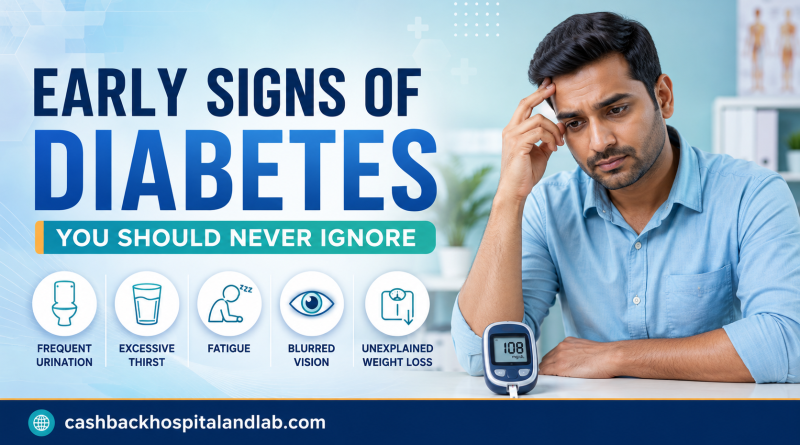
1. Frequent Urination
One of the classic symptoms is:
Urinating more often than usual
When blood glucose becomes sufficiently elevated, the kidneys try to remove excess glucose through urine. This can increase urine production.
You may notice:
- More frequent trips to the toilet
- Waking repeatedly at night to urinate
- Passing larger amounts of urine
Frequent urination can have many other causes, so it does not automatically mean diabetes.
2. Excessive Thirst
Feeling unusually thirsty despite drinking enough water can accompany diabetes.
Increased urination causes fluid loss, which can make you thirsty.
The combination of:
Frequent urination + persistent thirst
is particularly worth investigating. Increased thirst and urination are recognized symptoms of diabetes.
3. Increased Hunger
Another possible sign is:
Feeling hungry even after eating.
Glucose may be abundant in the bloodstream while cells cannot use it normally because of inadequate insulin action.
Increased hunger is among the recognized symptoms of diabetes.
4. Unexplained Fatigue
Feeling unusually:
- Tired
- Weak
- Low in energy
- Sleepy
- Less productive
can occur with diabetes.
Fatigue is extremely nonspecific—it can also result from anaemia, inadequate sleep, thyroid disorders, infections, stress and many other conditions.
But persistent fatigue alongside thirst, frequent urination or weight changes deserves evaluation.
5. Unexplained Weight Loss
Losing weight without trying can be an important warning sign.
It is especially characteristic of significant insulin deficiency and can occur in type 1 diabetes, although it may also occur in type 2 diabetes.
Do not assume unexplained weight loss is a desirable “natural weight-loss” effect.
Unexpected weight loss deserves medical assessment.
6. Blurred Vision
High blood glucose can cause changes that affect vision.
A person may notice:
- Intermittent blurred vision
- Difficulty focusing
- Vision seeming different from day to day
Blurred vision is a recognized symptom of diabetes.
Persistent or sudden visual changes require proper eye and medical evaluation rather than simply changing spectacles.
7. Cuts and Wounds That Heal Slowly
A small cut that seems to take unusually long to heal can sometimes be associated with diabetes.
Persistently high glucose can contribute to problems involving:
- Circulation
- Immune function
- Nerve health
Sores that do not heal are among recognized diabetes symptoms.
A non-healing foot wound is particularly important and should not be ignored.
8. Frequent Infections
Some people with diabetes experience recurrent infections, including:
- Skin infections
- Urinary tract infections
- Yeast/fungal infections
Frequent infections are recognized among possible diabetes symptoms.
Recurring infection does not prove diabetes, but it can be a reason to check blood glucose.
9. Tingling or Numbness in Hands or Feet
People with type 2 diabetes may notice:
Tingling
Burning
Numbness
Altered sensation
particularly in the feet.
Numbness or tingling of the hands or feet is recognized as a possible symptom of type 2 diabetes.
However, neuropathy has many causes—including vitamin deficiencies, thyroid disorders, alcohol-related disease and nerve compression—so proper evaluation matters.
10. Itching and Dry Skin
Persistent dry or itchy skin may occur in someone with diabetes, but it is not specific enough to diagnose diabetes.
Much more common causes include:
- Dry weather
- Eczema
- Allergy
- Irritant dermatitis
- Fungal infection
If itching occurs together with classic diabetes symptoms, blood-glucose testing may be appropriate.
11. Recurrent Genital Fungal Infections
High glucose levels can create conditions favourable to yeast growth.
Possible symptoms include:
In women
- Vaginal itching
- Irritation
- Recurrent candidiasis
In men
- Itching or redness around the penis
- Recurrent balanitis/candidal infection
Repeated genital fungal infections can sometimes be an early clue to previously undiagnosed diabetes.
12. Sexual Problems
Long-standing diabetes can affect nerves and blood vessels.
Men may experience erectile dysfunction, while women may experience sexual-health problems.
However:
Sexual dysfunction alone should not be interpreted as evidence of diabetes.
There are numerous other possible causes.
13. Dark Skin Around the Neck or Armpits
A dark, thickened, velvety appearance of skin—particularly around:
- Neck
- Armpits
- Groin
may represent acanthosis nigricans.
It can be associated with insulin resistance, although it has other causes as well.
Its presence may justify assessment for metabolic risk factors.
14. Type 2 Diabetes Can Be Completely Silent
This is perhaps the most important point.
You can have diabetes without feeling sick.
Type 2 diabetes symptoms often develop slowly and can be mild enough to go unnoticed. Some people have no symptoms at all.
Therefore:
“I feel perfectly healthy” does not guarantee normal blood glucose.
15. Prediabetes Is Usually Silent Too
Prediabetes means glucose levels are above the normal range but below the diagnostic range for diabetes.
Most people will not identify prediabetes from symptoms.
It is detected through blood testing.
NIDDK lists these laboratory ranges for prediabetes:
| Test | Prediabetes |
|---|---|
| HbA1c | 5.7–6.4% |
| Fasting plasma glucose | 100–125 mg/dL |
| 2-hour OGTT | 140–199 mg/dL |
16. Type 1 Diabetes Can Develop Differently
Type 1 diabetes can appear much more rapidly than typical type 2 diabetes.
Symptoms may include:
Excessive thirst
Frequent urination
Weight loss
Severe fatigue
Increased hunger
Symptoms developing rapidly—particularly in a child, teenager or young adult—should receive prompt medical attention.
Importantly, type 1 diabetes can also develop in adults.
17. Dangerous Warning Signs
Severe insulin deficiency can lead to diabetic ketoacidosis (DKA), which is a medical emergency.
Urgent medical care is needed when symptoms suggestive of diabetes are accompanied by problems such as:
- Persistent vomiting
- Abdominal pain
- Rapid or deep breathing
- Severe dehydration
- Marked weakness
- Confusion or reduced consciousness
Do not attempt to manage a suspected diabetic emergency with home remedies.
18. Early Diabetes: Myths vs Facts
| MYTH | FACT |
|---|---|
| Diabetes always causes symptoms | Type 2 diabetes can be symptomless |
| Only overweight people develop diabetes | People at many body weights can develop it |
| Frequent urination always means diabetes | Many conditions can cause it |
| If I don't eat sweets, I can't get diabetes | Diabetes has multiple risk factors |
| Diabetes happens only in old age | It can occur at many ages |
| Home glucose meters alone diagnose diabetes | Diagnosis requires appropriate laboratory testing |
| Prediabetes always causes symptoms | It is commonly silent |
| Herbal remedies can confirm whether you have diabetes | Blood testing is required |
19. How Is Diabetes Actually Diagnosed?
Symptoms can raise suspicion, but diagnosis is based on blood tests.
For nonpregnant adults, NIDDK lists the following diagnostic thresholds:
| Test | Normal | Prediabetes | Diabetes |
|---|---|---|---|
| HbA1c | Below 5.7% | 5.7–6.4% | ≥6.5% |
| Fasting plasma glucose | ≤99 mg/dL | 100–125 mg/dL | ≥126 mg/dL |
| 2-hour OGTT | ≤139 mg/dL | 140–199 mg/dL | ≥200 mg/dL |
A random plasma glucose of 200 mg/dL or higher in a person with classic symptoms can also meet diagnostic criteria. In people without unequivocal symptoms, abnormal results generally require confirmation.
20. What Is HbA1c?
HbA1c (A1C) provides an estimate of average blood glucose over roughly the previous three months.
It has an important advantage:
You usually don't need to fast.
But A1C can be misleading in certain situations, including some anaemias, haemoglobin variants, kidney disease and other conditions affecting red blood cells.
21. Don't Diagnose Yourself With a Home Glucose Meter
A home glucometer is extremely useful for monitoring glucose.
But an isolated home reading should not be used to establish a diabetes diagnosis.
NIDDK specifically notes that over-the-counter blood glucose equipment cannot diagnose diabetes; diagnosis requires appropriate blood testing.
22. Who Should Consider Testing?
Testing becomes especially important if you have symptoms or significant risk factors such as:
- Family history of type 2 diabetes
- Overweight or obesity
- Physical inactivity
- Previous gestational diabetes
- History of prediabetes
- Hypertension
- Abnormal cholesterol/triglycerides
- Other metabolic risk factors
Importantly, anyone experiencing symptoms suggestive of diabetes should be tested.
23. Don't Wait for All the Symptoms
A person does not need:
thirst + urination + hunger + weight loss + blurred vision + infections
all at once.
You might have only one symptom.
Or:
You may have none.
That is why screening and appropriate laboratory testing are more reliable than symptom-checking.
24. What Should You Do If You Notice Early Signs?
A sensible approach is:
Symptoms or risk factors
↓
Consult a healthcare professional
↓
Laboratory glucose/HbA1c testing
↓
Confirm abnormal results when required
↓
Determine the type of diabetes
↓
Begin appropriate treatment and lifestyle management
Finding diabetes earlier allows treatment to begin before prolonged high glucose causes more damage.
25. Don't Start “Diabetes Herbs” Before Establishing the Diagnosis
A common mistake is noticing symptoms, checking one high glucose reading and immediately starting:
- Karela
- Methi
- Gudmar
- Jamun seed
- Herbal combinations
before obtaining a proper diagnosis.
These products cannot determine whether someone has type 1 diabetes, type 2 diabetes or another cause of hyperglycaemia.
That distinction can be critical because type 1 diabetes requires insulin.
The Early Warning Checklist
Consider blood-glucose testing if you experience unexplained:
☑ Frequent urination
☑ Excessive thirst
☑ Increased hunger
☑ Persistent fatigue
☑ Unintentional weight loss
☑ Blurred vision
☑ Slow-healing wounds
☑ Recurrent skin, urinary or yeast infections
☑ Tingling or numbness in the hands/feet
These are recognized symptoms associated with diabetes, but none alone proves that diabetes is present.
Conclusion
The most important early sign of diabetes may actually be:
No obvious sign at all.
Type 2 diabetes can progress quietly for years. When symptoms do occur, frequent urination, excessive thirst, increased hunger, fatigue, blurred vision, unexplained weight loss, slow-healing sores, recurrent infections and tingling or numbness are important clues.
But symptoms cannot confirm diabetes.
A simple blood test can.
If diabetes is suspected, laboratory HbA1c, fasting plasma glucose or another appropriate glucose test should be used rather than waiting for symptoms to become severe.
Early recognition gives people an opportunity to begin appropriate nutrition, physical activity, weight management where needed, monitoring and medical treatment before complications progress.
Disclaimer: This article is for general education and does not replace medical diagnosis or individualized treatment. Seek prompt medical care for severe symptoms, rapid deterioration, vomiting, dehydration, breathing difficulty, confusion or suspected diabetic ketoacidosis.
cashbackhospitalandlab.com