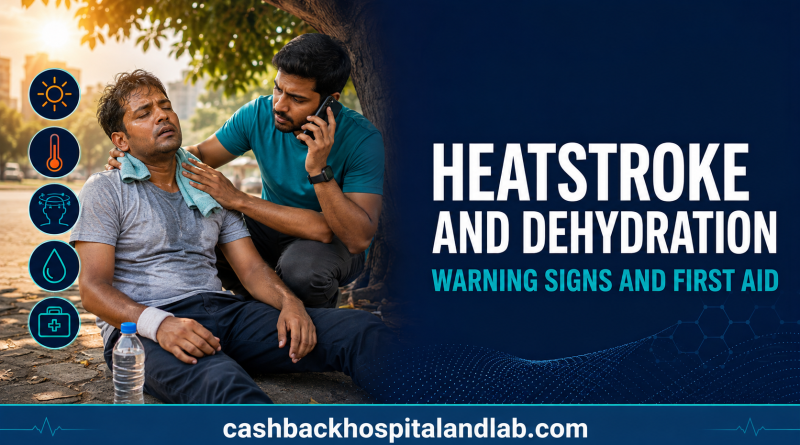
Heatstroke and Dehydration: Warning Signs and First Aid
Hot weather can become dangerous much faster than many people realize. Prolonged exposure to high temperatures—especially when combined with humidity, strenuous physical activity, inadequate fluid intake or certain medical conditions—can lead to dehydration, heat exhaustion and potentially life-threatening heatstroke.

Most mild heat-related illness improves when recognized early. Heatstroke, however, is a medical emergency that can rapidly damage the brain, heart, kidneys, muscles and other organs.
The most important distinction is simple:
A person who is hot and thirsty may need fluids and cooling. A person with severe confusion, collapse, seizures or altered consciousness in the heat may have heatstroke and needs emergency medical care plus immediate cooling.
What Is Dehydration?
Dehydration occurs when the body loses more fluid than it takes in.
Water is continuously lost through:
- Urine
- Sweat
- Breathing
- Stool
During hot weather or strenuous exercise, sweating can dramatically increase fluid losses.
Dehydration can also occur because of:
- Vomiting
- Diarrhoea
- Fever
- Poor fluid intake
- Certain medications
- Excessive alcohol consumption
Mild dehydration can cause thirst and fatigue. Severe dehydration can impair circulation and become dangerous.
Why Hot Weather Increases Dehydration Risk
The human body normally keeps its internal temperature within a narrow range.
When the environment becomes hot, the body attempts to release heat partly through sweating.
As sweat evaporates, it cools the skin.
However, sweating also causes the body to lose:
- Water
- Sodium
- Other electrolytes
If these losses are not adequately replaced, dehydration develops.
Humidity Makes Heat More Dangerous
High humidity reduces the evaporation of sweat.
You may continue sweating heavily without cooling efficiently.
This is why a hot, humid day can sometimes be more dangerous than the same temperature in a dry environment.
The body may gradually accumulate heat even though the skin is covered with sweat.
What Is Heat Exhaustion?
Heat exhaustion is a heat-related illness that can occur after substantial exposure to heat and fluid loss.
Common symptoms include:
- Heavy sweating
- Weakness
- Fatigue
- Headache
- Dizziness
- Nausea
- Muscle cramps
- Thirst
- Fast pulse
The person is generally still able to communicate normally, although they may feel extremely weak.
Heat exhaustion requires prompt cooling and hydration because it can progress to heatstroke.
What Is Heatstroke?
Heatstroke is the most severe form of heat-related illness.
It occurs when the body's ability to control temperature fails and severe overheating develops.
The defining danger is not simply “being very hot.”
A major warning sign is central nervous system dysfunction, such as:
- Confusion
- Disorientation
- Abnormal behaviour
- Loss of coordination
- Seizures
- Collapse
- Loss of consciousness
Heatstroke requires immediate emergency treatment.
Heatstroke Can Be Fatal
Heatstroke can cause rapid injury to:
- Brain
- Heart
- Kidneys
- Liver
- Muscles
- Blood-clotting systems
The longer the body remains dangerously overheated, the greater the risk of permanent organ damage or death.
Do not wait to see whether suspected heatstroke improves on its own.
Heat Exhaustion vs Heatstroke
| Feature | Heat Exhaustion | Heatstroke |
|---|---|---|
| Sweating | Usually heavy | May be heavy or sometimes reduced |
| Skin | Hot, sweaty | Very hot; may be wet or dry |
| Mental status | Usually normal | Confusion, abnormal behaviour, seizures or unconsciousness |
| Weakness | Common | Often severe |
| Headache | Common | May be severe |
| Nausea | Common | Common |
| Body temperature | Elevated | Often very high |
| Emergency? | Needs prompt treatment | Medical emergency |
The most important warning sign is altered mental status.
A Dangerous Myth: “Heatstroke Means You Stop Sweating”
Not necessarily.
People with heatstroke can still sweat.
This is particularly common in exertional heatstroke, which can affect athletes, outdoor workers and military personnel.
Therefore, do not rule out heatstroke simply because the person's skin is wet.
Early Signs of Dehydration
Mild or moderate dehydration may cause:
- Thirst
- Dry mouth
- Reduced urination
- Darker urine
- Headache
- Tiredness
- Dizziness
- Reduced exercise performance
These symptoms should prompt fluid replacement and reduction in heat exposure.
Severe Dehydration Warning Signs
More serious dehydration can cause:
- Very little or no urine
- Severe weakness
- Rapid heartbeat
- Rapid breathing
- Dizziness when standing
- Fainting
- Confusion
- Extreme sleepiness
Severe dehydration may require urgent medical treatment and intravenous fluids.
What Does Urine Colour Tell You?
Urine colour can provide a rough clue about hydration.
Pale yellow urine often suggests adequate hydration.
Dark yellow urine may suggest concentrated urine and inadequate fluid intake.
However, urine colour is not a perfect hydration test.
It can also be affected by:
- Vitamins
- Foods
- Medications
- Medical conditions
Who Is at Higher Risk During Heat?
Heat illness can affect anyone, but risk is particularly important among:
- Older adults
- Infants and young children
- Outdoor workers
- Athletes
- People performing strenuous physical activity
- People with heart disease
- People with kidney disease
- People with diabetes
- People taking certain medications
- People without access to adequate cooling
- People not accustomed to hot weather
Older Adults and Heat
Older adults may be particularly vulnerable because ageing can affect:
- Thirst sensation
- Temperature regulation
- Kidney function
- Mobility
They may also take medications that influence hydration or heat tolerance.
Family members and caregivers should check on vulnerable older adults during extreme heat.
Children and Dehydration
Children can lose fluid quickly, particularly with:
- Fever
- Vomiting
- Diarrhoea
- Hot weather
- Prolonged outdoor activity
Warning signs can include:
- Dry mouth
- Reduced urination
- Unusual sleepiness
- Irritability
- Reduced tears
- Sunken eyes
Infants and young children with significant dehydration require prompt medical assessment.
Outdoor Workers
People working in:
- Agriculture
- Construction
- Factories
- Delivery services
- Road work
- Landscaping
may spend many hours exposed to heat.
Prevention should include:
- Regular drinking opportunities
- Shade
- Rest breaks
- Appropriate clothing
- Gradual heat acclimatization
- Recognition of early symptoms
Workers should not be encouraged to “push through” dizziness, confusion or severe weakness.
Athletes and Heatstroke
Strenuous exercise generates substantial internal heat.
Exertional heatstroke can occur during:
- Running
- Football
- Cycling
- Military training
- Intense outdoor exercise
A young, physically fit person can still develop heatstroke.
Fitness does not provide complete protection.
Heat Acclimatization
The body can gradually adapt to exercising or working in hot environments.
Adaptation can improve:
- Sweating efficiency
- Cardiovascular stability
- Heat tolerance
People beginning strenuous activity in hot weather should gradually increase exposure rather than immediately performing maximum-intensity work.
Certain Medicines Can Increase Heat Risk
Some medications can affect:
- Sweating
- Thirst
- Blood pressure
- Fluid balance
- Kidney function
- Temperature regulation
Examples can include certain:
- Diuretics
- Anticholinergic medicines
- Psychiatric medicines
- Blood-pressure medicines
Do not stop prescribed medication simply because the weather is hot.
Instead, people at increased risk should discuss a heat plan with their healthcare professional.
First Aid for Heat Exhaustion
If someone appears to have heat exhaustion:
- Move them out of the heat.
- Place them in an air-conditioned or shaded environment.
- Have them lie down and rest.
- Remove unnecessary or tight clothing.
- Cool the skin with cool water, wet cloths, fans or a cool shower.
- If fully alert and able to swallow, provide cool fluids.
- Consider an oral rehydration solution when substantial sweating or fluid loss has occurred.
- Monitor closely for worsening symptoms.
If confusion, collapse, seizures or reduced consciousness develops, treat the situation as possible heatstroke.
First Aid for Suspected Heatstroke
Heatstroke is an emergency.
If someone exposed to heat develops severe confusion, abnormal behaviour, seizures, collapse or unconsciousness:
1. Call emergency medical services immediately.
Do not delay seeking medical help while attempting home treatment.
2. Begin rapid cooling.
Move the person to a cooler area and remove unnecessary clothing.
3. Cool aggressively.
Depending on available resources, use:
- Cool or cold-water immersion when feasible
- Continuous cool water on the skin
- Wet towels or sheets
- Fans combined with water
- Ice packs around the neck, armpits and groin as an additional measure
The objective is to reduce body temperature as rapidly as safely possible.
4. Continue cooling while waiting for medical help.
Cooling should begin immediately rather than waiting for transport.
Cold-Water Immersion
For exertional heatstroke—particularly in athletes—rapid cold-water immersion is one of the most effective cooling techniques when it can be performed safely.
The principle is sometimes summarized as:
Cool first, transport immediately/appropriately.
Emergency medical care is still essential.
Do not allow cooling efforts to prevent activation of emergency services.
Should You Give Water During Heatstroke?
If the person is:
- Confused
- Vomiting repeatedly
- Having seizures
- Very drowsy
- Unconscious
- Unable to swallow safely
do not give fluids by mouth.
They could choke or aspirate fluid into the lungs.
Fluids by mouth are appropriate only when the person is fully alert and can swallow normally.
Do Not Give Fever Medicines for Heatstroke
Heatstroke is not the same as fever caused by infection.
Medicines such as paracetamol/acetaminophen or ibuprofen do not correct the underlying problem.
They should not delay:
- Rapid cooling
- Emergency medical treatment
Heatstroke requires physical cooling and supportive medical care.
Do Not Rub Alcohol on the Skin
Alcohol rubs are not an appropriate heatstroke treatment.
They can potentially be absorbed and create additional problems.
Use established cooling methods such as:
- Water
- Fans
- Cold-water immersion where appropriate
instead.
Heat Cramps
Painful muscle cramps can occur during prolonged activity and heavy sweating.
They commonly affect:
- Legs
- Arms
- Abdomen
Move to a cooler environment, stop strenuous activity and replace fluids.
When substantial sweating has occurred, fluids containing appropriate electrolytes may be helpful.
Persistent or severe symptoms deserve medical attention.
Heat Syncope
Heat syncope refers to fainting or near-fainting associated with heat exposure.
It can occur because of:
- Blood-vessel dilation
- Prolonged standing
- Dehydration
The person should be moved to a cooler environment and assessed.
Because fainting can have many causes, persistent or unexplained episodes should not automatically be blamed on heat.
How Much Water Should You Drink in Hot Weather?
There is no single amount suitable for everyone.
Fluid needs depend on:
- Body size
- Temperature
- Humidity
- Activity level
- Sweat rate
- Diet
- Pregnancy
- Medical conditions
The practical approach is to drink regularly during prolonged heat exposure rather than waiting until severe thirst develops.
Water vs Electrolyte Drinks
For ordinary daily activity, water is usually sufficient.
Electrolyte-containing fluids may become useful during:
- Prolonged heavy sweating
- Long-duration exercise
- Significant vomiting or diarrhoea
- Substantial fluid and salt loss
Not everyone working in an office during summer needs a sports drink.
Oral Rehydration Solution (ORS)
ORS is specifically designed to improve absorption of water and electrolytes.
It can be particularly useful during dehydration caused by:
- Diarrhoea
- Vomiting
and may also be helpful in selected situations involving significant fluid loss.
Commercially prepared ORS should be mixed according to the package instructions.
Do not make it stronger than recommended.
Sports Drinks Are Not the Same as ORS
Sports drinks and medical oral rehydration solutions are designed for different purposes.
Sports drinks are primarily intended to support prolonged exercise.
ORS uses carefully designed concentrations of:
- Glucose
- Sodium
- Other electrolytes
to improve fluid absorption during dehydration.
They should not automatically be considered interchangeable.
Can You Drink Too Much Water?
Yes.
Drinking excessive amounts of plain water in a short period can dilute blood sodium and cause:
hyponatremia.
Symptoms can include:
- Headache
- Nausea
- Confusion
- Seizures
This is another reason hydration advice should not simply be:
“Drink as much water as possible.”
Salt Tablets?
Routine use of salt tablets is generally unnecessary for most people and can cause problems if used incorrectly.
People performing prolonged strenuous work or exercise in extreme heat may have individualized electrolyte requirements.
Food, appropriate fluids and properly formulated electrolyte solutions are usually more practical than unsupervised salt tablets.
Alcohol and Heat
Alcohol can increase heat-related risk because it may:
- Impair judgment
- Contribute to dehydration
- Reduce recognition of symptoms
During extreme heat, alcohol should not be used as a hydration strategy.
Caffeine and Dehydration
Moderate amounts of coffee and tea can contribute to daily fluid intake.
It is inaccurate to assume that every caffeinated drink automatically causes dehydration.
However, excessive caffeine—particularly combined with strenuous activity and extreme heat—may contribute to:
- Palpitations
- Sleep disruption
- Gastrointestinal symptoms
Water should remain a primary hydration source.
What Should You Wear in Hot Weather?
When possible, choose:
- Lightweight clothing
- Loose-fitting clothing
- Breathable fabrics
- Light-coloured clothing
A wide-brimmed hat and shade can reduce direct sun exposure.
People working outdoors may also need protective clothing appropriate to their occupation.
Avoid the Hottest Part of the Day
When possible, schedule strenuous outdoor activity for:
- Early morning
- Later evening
rather than peak afternoon heat.
This is particularly important during heat waves.
Cars Can Become Deadly
Never leave:
- Children
- Older adults
- People with disabilities
- Pets
inside a parked vehicle in hot weather.
The temperature inside a vehicle can rise rapidly even when the outside temperature does not seem extreme.
Opening a window slightly does not make this safe.
Fans Have Limits
Fans can improve comfort and assist evaporative cooling in many circumstances.
However, during extreme heat, particularly when air temperature is very high, a fan alone may not provide adequate protection.
Access to:
- Air conditioning
- Cooling centres
- Cooler indoor environments
may be necessary during severe heat waves.
Heat Rash
Heat rash occurs when sweat becomes trapped in the skin.
It can cause:
- Small red bumps
- Itching
- Prickling sensation
Keeping the skin cool and dry and avoiding excessive heat usually helps.
Heat rash itself is generally much less dangerous than heat exhaustion or heatstroke.
Heatstroke Myths vs Facts
| Myth | Fact |
|---|---|
| Heatstroke only happens in direct sunlight | It can occur in any sufficiently hot environment |
| You must stop sweating to have heatstroke | People with heatstroke may still sweat |
| Young fit people cannot get heatstroke | Exertional heatstroke can affect healthy athletes |
| A high temperature alone defines heatstroke | Altered brain function is a critical warning sign |
| Give water to everyone with heatstroke | Do not give oral fluids to someone who cannot swallow safely |
| Fever medicine treats heatstroke | Heatstroke requires rapid physical cooling |
| Sports drinks prevent all heat illness | Rest, cooling, acclimatization and appropriate hydration also matter |
| More water is always better | Excessive water can cause hyponatremia |
| Heat exhaustion and heatstroke are the same | Heatstroke is a life-threatening emergency |
| Wait to see whether confusion improves | Confusion during heat exposure requires urgent action |
Warning Signs That Require Emergency Care
Seek emergency medical help for a heat-exposed person who develops:
- Confusion
- Disorientation
- Abnormal behaviour
- Seizures
- Collapse
- Loss of consciousness
- Severe difficulty walking
- Severe breathing difficulty
- Persistent vomiting
- Signs of shock
Begin cooling immediately while emergency care is being arranged.
How to Prevent Heat Illness
A practical prevention strategy includes:
- Drink fluids regularly.
- Increase fluid intake during heavy sweating.
- Take rest breaks.
- Use shade or air conditioning when possible.
- Wear appropriate lightweight clothing.
- Avoid unnecessary strenuous activity during peak heat.
- Gradually acclimatize to hot conditions.
- Never leave anyone in a parked vehicle.
- Check on vulnerable family members during heat waves.
- Recognize early symptoms instead of pushing through them.
A Simple Heat-Safety Plan
Before spending hours outdoors, consider four things:
Water
Carry enough fluid or know where safe drinking water is available.
Rest
Plan regular breaks before severe fatigue develops.
Shade
Identify shaded or cooled areas.
Buddy System
Workers, athletes and travellers should watch one another for:
- Confusion
- Unusual behaviour
- Loss of coordination
- Severe weakness
A person developing heatstroke may no longer recognize that something is wrong.
Frequently Asked Questions
What is the first sign of dehydration?
Thirst, dry mouth, reduced urination and darker urine are common early signs, although symptoms vary.
What is the biggest warning sign of heatstroke?
Confusion or other altered mental status during significant heat exposure is a major emergency warning sign.
Can heatstroke occur while someone is sweating?
Yes. Sweating does not rule out heatstroke.
Should I give water to someone with heatstroke?
Only if the person is fully alert and able to swallow safely. Never force oral fluids into someone who is confused, having seizures or unconscious.
Should I use ice to cool someone?
Cold-water immersion is highly effective for exertional heatstroke when feasible. Ice packs can also assist cooling, particularly around areas such as the neck, armpits and groin, but should not delay more effective whole-body cooling or emergency medical care.
Does ORS help dehydration?
ORS can be very effective for fluid and electrolyte replacement, particularly with vomiting or diarrhoea and in other appropriate dehydration situations.
Can too much water be dangerous?
Yes. Excessive rapid intake of plain water can cause dangerously low blood sodium.
The Bottom Line
Dehydration and heat-related illness exist on a spectrum.
Early symptoms such as:
thirst, headache, dizziness, heavy sweating and weakness
should prompt rest, cooling and appropriate hydration.
But when heat exposure is accompanied by:
confusion, abnormal behaviour, seizures, collapse or loss of consciousness, suspect heatstroke.
Heatstroke is not something to manage casually at home.
Call emergency medical services and begin rapid cooling immediately.
Conclusion
Most heat-related illness is preventable.
During hot weather:
Hydrate appropriately. Take breaks. Seek shade. Avoid unnecessary peak-heat exertion. Acclimatize gradually. Check vulnerable people. Never leave anyone in a parked vehicle.
Most importantly, remember the emergency distinction:
Hot + tired + sweating → think heat exhaustion and act early.
Hot + confused/collapsed/seizing → think heatstroke and treat it as an emergency.
Rapid recognition and rapid cooling can save a life.
Disclaimer: This article is for general educational purposes only and does not replace emergency medical care or individualized medical advice. Suspected heatstroke, severe dehydration, altered consciousness, seizures or collapse requires urgent professional medical assessment.
cashbackhospitalandlab.com