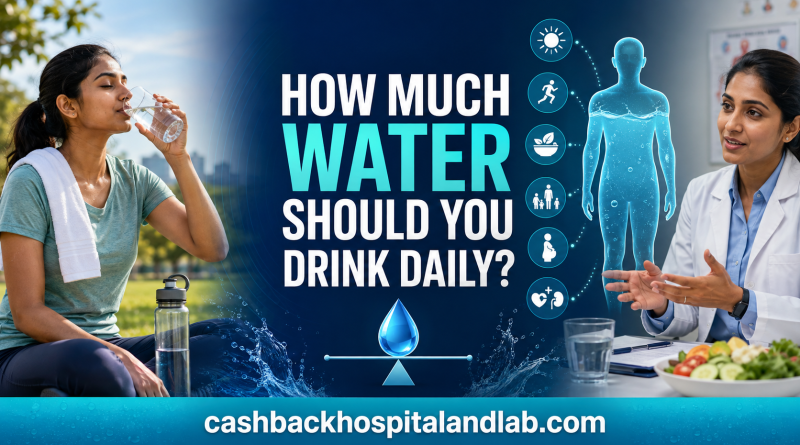
How Much Water Should You Drink Daily?
Water is essential for life. It helps regulate body temperature, transport nutrients, remove waste, support digestion, maintain blood volume and allow nearly every organ system to function normally.
But the popular advice to “drink 8 glasses of water every day” is not a universal scientific requirement.
Your daily water needs depend on several factors, including:
- Body size
- Age
- Physical activity
- Climate
- Pregnancy and breastfeeding
- Diet
- Illness
- Certain medications
- Kidney and heart function
The practical message is:
There is no single amount of water that is perfect for everyone. Drink according to your individual needs, activity, environment and medical circumstances.
Why Does the Body Need Water?
Water makes up a substantial proportion of the human body and is involved in almost every physiological process.
It helps with:
- Temperature regulation
- Blood circulation
- Digestion
- Nutrient transport
- Kidney function
- Waste removal
- Joint lubrication
- Saliva production
- Normal bowel function
- Cellular metabolism
The body continuously loses water and therefore needs regular replacement.
How Does the Body Lose Water?
Water is lost through:
- Urine
- Sweat
- Breathing
- Stool
Losses increase during:
- Hot weather
- Exercise
- Fever
- Vomiting
- Diarrhoea
- Heavy sweating
These losses must be replaced to maintain normal hydration.
How Much Water Does an Adult Need?
There is no universal prescription that applies to every adult.
A commonly referenced estimate for total daily water intake from all beverages and foods is approximately:
| Group | Approximate Total Water Intake |
|---|---|
| Adult men | About 3.7 litres/day |
| Adult women | About 2.7 litres/day |
These figures represent total water, not simply glasses of plain drinking water.
That distinction is important.
Total Water Is Not the Same as Plain Water
Your body receives water from:
- Plain water
- Milk
- Tea
- Coffee
- Soups
- Fruits
- Vegetables
- Other beverages
- Moisture present in food
For many people, food contributes a meaningful proportion of total daily water intake.
Therefore, someone does not necessarily need to drink 3–4 litres of plain water to achieve an adequate total intake.
Is 8 Glasses of Water a Day Necessary?
The “8 glasses a day” rule is a convenient reminder, but it is not a universal biological requirement.
Eight glasses of approximately 250 mL equals about:
2 litres of fluid.
That may be reasonable for some people but insufficient for others and unnecessary for some.
Your needs change with your circumstances.
What Is the Best Practical Guide?
For most healthy adults, useful guides include:
- Drink when thirsty.
- Drink regularly throughout the day.
- Increase fluid intake when sweating heavily.
- Pay attention to urine colour and frequency.
- Drink extra during illness involving fluid loss.
The body's thirst mechanism is generally effective in healthy people, although it may become less reliable in some older adults.
What Does Urine Colour Tell You?
Urine colour can provide a rough indication of hydration.
Pale yellow
Usually consistent with adequate hydration.
Dark yellow
May suggest that you need more fluid.
Completely colourless urine all day
Can occur when fluid intake is higher than necessary.
However, urine colour is not a perfect hydration test.
It can be affected by:
- Vitamins
- Medicines
- Foods
- Kidney conditions
- Liver conditions
Should Your Urine Always Be Completely Clear?
No.
You do not need to force yourself to drink until your urine is colourless.
Pale yellow urine is generally a reasonable practical target.
Constantly clear urine may simply indicate that you are drinking more fluid than your body requires.
Does Thirst Mean You Are Already Severely Dehydrated?
No.
Thirst is an early physiological mechanism that encourages fluid intake.
Feeling thirsty does not automatically mean dangerous dehydration has already developed.
However, thirst should not be ignored during:
- Hot weather
- Exercise
- Fever
- Vomiting
- Diarrhoea
Older adults may also have a reduced thirst response.
Signs of Mild Dehydration
Possible symptoms include:
- Thirst
- Dry mouth
- Darker urine
- Reduced urination
- Headache
- Fatigue
- Dizziness
- Reduced exercise performance
These symptoms are not specific to dehydration, but they can provide useful clues.
Signs of Severe Dehydration
More serious dehydration may cause:
- Very little or no urine
- Rapid heartbeat
- Low blood pressure
- Severe dizziness
- Fainting
- Confusion
- Extreme weakness
- Difficulty staying awake
Severe dehydration requires prompt medical attention.
Water Needs During Hot Weather
People living in hot climates often require more fluid because sweating increases water loss.
This is particularly relevant during:
- Indian summers
- Heatwaves
- Outdoor work
- High humidity
- Prolonged sun exposure
Do not wait until severe thirst develops during prolonged heat exposure.
Drink fluids regularly and take cooling breaks when possible.
Water Needs During Exercise
Exercise increases water requirements through sweat loss.
How much extra you need depends on:
- Exercise intensity
- Duration
- Temperature
- Humidity
- Clothing
- Individual sweat rate
There is no single volume that suits every athlete.
Should You Drink Before Exercise?
Starting exercise well hydrated is sensible.
Drink normally during the hours before activity rather than consuming a very large amount immediately before exercising.
During prolonged exercise, replace fluid according to thirst, sweat losses and conditions.
Do You Need Electrolytes During Exercise?
For ordinary short workouts, plain water is usually sufficient.
Electrolyte replacement becomes more relevant during:
- Long-duration exercise
- Heavy sweating
- Prolonged outdoor activity
- Very hot conditions
Sweat contains sodium and other electrolytes.
However, sports drinks are unnecessary for many routine gym sessions.
Water vs ORS
Water and Oral Rehydration Solution (ORS) serve different purposes.
Plain water is appropriate for routine hydration.
ORS is specifically formulated to replace:
- Water
- Sodium
- Glucose
- Other electrolytes
lost during significant diarrhoea or vomiting.
ORS should not be treated as an everyday replacement for ordinary drinking water in healthy people.
Hydration During Diarrhoea
Diarrhoea causes loss of both water and electrolytes.
For significant diarrhoeal illness, ORS is generally more appropriate than relying only on:
- Plain water
- Juice
- Soft drinks
- Sports drinks
Prepare ORS according to packet instructions.
Do not make it unnecessarily concentrated.
Hydration During Vomiting
When vomiting occurs, large amounts of water taken quickly may trigger further vomiting.
Instead:
Take small, frequent sips.
If vomiting continues and no fluids can be retained, medical assessment may be necessary.
How Much Water During Fever?
Fever can increase fluid requirements because of:
- Increased sweating
- Faster breathing
- Reduced appetite
- Reduced fluid intake
There is no fixed number of litres required for every fever.
Drink regularly and monitor for signs of dehydration.
Water Needs During Pregnancy
Fluid requirements generally increase during pregnancy.
Water supports:
- Increased blood volume
- Fetal circulation
- Amniotic fluid
- Normal maternal physiology
Pregnant people should drink regularly according to thirst and environmental conditions.
Requirements may increase further in hot weather or with physical activity.
Water Needs During Breastfeeding
Breastfeeding increases water requirements because water is used to produce breast milk.
A practical approach is to:
- Drink when thirsty.
- Keep water conveniently available while feeding.
- Increase fluids during hot weather.
Forcing excessive amounts does not necessarily increase milk production.
Water Needs in Children
Children's hydration requirements vary according to:
- Age
- Body size
- Activity
- Climate
- Diet
Children may become dehydrated relatively quickly during:
- Fever
- Vomiting
- Diarrhoea
Parents should encourage regular fluids, particularly during hot weather and physical activity.
Water Needs in Older Adults
Older adults deserve particular attention because thirst sensation can become less reliable with age.
Additional factors may include:
- Reduced mobility
- Difficulty accessing water
- Certain medications
- Kidney disease
- Cognitive impairment
Regular access to fluids can help prevent dehydration.
However, some older adults also have conditions requiring fluid restriction.
Can Tea and Coffee Count Toward Hydration?
Yes.
Tea and coffee contain water and contribute to daily fluid intake.
Caffeine has a mild diuretic effect, but normal amounts of caffeinated beverages can still contribute to hydration.
You do not necessarily need to drink an additional glass of water for every cup of coffee.
Does Milk Count as Fluid?
Yes.
Milk contains a large amount of water and contributes to hydration.
It also provides nutrients such as:
- Protein
- Calcium
- Vitamin B12
depending on the type of milk.
Do Fruits and Vegetables Provide Water?
Yes.
Water-rich foods include:
- Watermelon
- Cucumber
- Oranges
- Muskmelon
- Tomatoes
- Strawberries
- Lettuce
- Soups
Food therefore contributes to overall hydration.
Coconut Water
Coconut water contains:
- Water
- Potassium
- Some sodium
- Natural sugars
It can contribute to fluid intake.
However, it is not necessary for routine hydration, and it should not replace ORS for significant diarrhoeal dehydration.
People with kidney disease or potassium restrictions should be cautious about consuming large quantities.
Lemon Water
Lemon water is essentially water with added flavour and a small amount of nutrients from lemon.
It can be useful if it encourages someone to drink adequate fluids.
However, it does not:
- Detoxify the body
- Burn significant amounts of fat
- Cure disease
Plain water works perfectly well for hydration.
Does Warm Water Have Special Health Benefits?
Warm water can be comfortable and may temporarily soothe the throat or aid comfort during illness.
However, there is no strong evidence that warm water:
- Burns belly fat
- Removes toxins
- Dramatically increases metabolism
Drink water at the temperature you find comfortable.
Does Drinking Water Help With Weight Loss?
Water can support weight management indirectly.
Replacing:
- Sugary drinks
- Sweetened beverages
- High-calorie drinks
with water can reduce calorie intake.
Drinking water before meals may also modestly increase fullness for some people.
But water itself is not a fat-burning treatment.
Does Drinking More Water Improve Skin?
Severe dehydration can affect skin appearance.
Correcting inadequate fluid intake is beneficial.
However, drinking excessive amounts of water does not automatically:
- Cure acne
- Remove wrinkles
- Produce “glowing skin”
Skin health depends on many factors including genetics, sun exposure, nutrition and skincare.
Does Water Detox the Body?
The body already has highly effective systems for removing metabolic waste, particularly:
- Kidneys
- Liver
- Lungs
- Gastrointestinal tract
Adequate hydration supports normal kidney function.
But drinking excessive water does not “flush out toxins” faster in a healthy person.
Does Drinking More Water Prevent Kidney Stones?
Adequate fluid intake is an important part of preventing many kidney stones.
Higher urine volume reduces the concentration of substances that can form stones.
People with a history of kidney stones may receive individualized recommendations about:
- Fluid intake
- Sodium
- Calcium
- Oxalate
- Citrate
depending on the type of stone.
Water and Urinary Tract Infections
Adequate hydration supports normal urinary function.
However, drinking excessive amounts of water is not a substitute for appropriate treatment of a urinary tract infection.
Symptoms such as:
- Burning urination
- Fever
- Flank pain
- Blood in urine
may require medical assessment.
Can Drinking Too Much Water Be Dangerous?
Yes.
Excessive water consumption can cause hyponatraemia, meaning the sodium concentration in the blood becomes dangerously low.
This occurs when water intake exceeds the body's ability to eliminate it.
Although uncommon in ordinary daily life, severe hyponatraemia can be life-threatening.
Symptoms of Water Intoxication
Possible symptoms include:
- Nausea
- Headache
- Vomiting
- Confusion
- Drowsiness
- Muscle cramps
Severe cases can cause:
- Seizures
- Coma
- Death
More water is therefore not always better.
Who Should Not Follow Generic Water Advice?
Some people require individualized fluid recommendations.
This is particularly important for people with:
- Heart failure
- Advanced kidney disease
- Certain liver diseases
- Low blood sodium
- Conditions causing fluid retention
Some patients may actually need fluid restriction.
If your doctor has prescribed a fluid limit, that advice takes priority over generic hydration recommendations.
Kidney Disease and Water Intake
The common advice to “drink lots of water to clean your kidneys” can be inappropriate.
People with advanced kidney disease may have difficulty removing excess fluid.
Too much fluid can contribute to:
- Swelling
- High blood pressure
- Breathlessness
- Fluid in the lungs
Follow individualized medical advice.
Heart Failure and Fluid Intake
Some people with heart failure are advised to limit fluids.
Excess fluid can worsen:
- Leg swelling
- Breathlessness
- Pulmonary congestion
Do not deliberately increase water intake if you have been prescribed a fluid restriction.
How to Estimate Your Personal Water Needs
Instead of chasing one universal number, consider:
Your thirst
Are you regularly thirsty?
Your urine
Is it generally pale yellow?
Your activity
Are you exercising or doing physical work?
Your environment
Is it hot or humid?
Your diet
Do you eat plenty of water-rich foods?
Your health
Do you have vomiting, diarrhoea or fever?
Your medical conditions
Have you been advised to restrict fluids?
These factors provide a more useful picture than simply counting glasses.
A Practical Daily Hydration Routine
For most healthy adults:
Morning: Drink according to thirst after waking and with breakfast.
During the day: Keep water accessible and drink regularly.
Meals: Drink according to preference and thirst.
Exercise: Increase intake according to sweat loss and duration.
Hot weather: Drink more frequently and take cooling breaks.
Evening: Hydrate normally, but excessive fluid immediately before sleep may increase nighttime urination.
There is no requirement to drink water at specific clock times.
Water Myths vs Facts
| Myth | Fact |
|---|---|
| Everyone needs exactly 8 glasses daily | Needs vary between individuals |
| Everyone needs 3–4 litres of plain water | Total water also comes from food and other drinks |
| Clear urine is always ideal | Pale yellow is usually a reasonable target |
| Thirst means severe dehydration | Thirst is an early physiological signal |
| Coffee always dehydrates you | Normal coffee intake contributes to hydration |
| Warm water burns belly fat | There is no meaningful fat-burning effect |
| Lemon water detoxes the body | The liver and kidneys perform detoxification |
| More water always improves skin | Excess water does not guarantee better skin |
| Everyone should drink water immediately after waking | There is no special mandatory timing |
| Water during meals damages digestion | Normal fluid intake with meals is generally fine |
| Drinking huge amounts cleans the kidneys | Excessive fluid can be harmful in some kidney conditions |
| More water is always healthier | Excessive intake can cause hyponatraemia |
Frequently Asked Questions
How many litres of water should I drink every day?
There is no single amount appropriate for everyone. Total water requirements depend on body size, climate, activity, diet and health.
Does 3.7 litres for men mean 3.7 litres of plain water?
No. This commonly cited figure refers to total water from beverages and foods, not plain water alone.
Is 2 litres of water enough?
It may be adequate for some people but not others. Needs increase with heat, physical activity and fluid loss.
Should I drink even if I am not thirsty?
Healthy adults can generally use thirst as an important guide. During prolonged heat, exercise or certain circumstances, regular planned fluid intake may also be useful.
What colour should urine be?
Pale yellow is generally a practical sign of adequate hydration.
Does tea count as water?
Yes. Tea contributes to overall fluid intake.
Can too much water damage the body?
Yes. Excessive intake can dilute blood sodium and cause potentially dangerous hyponatraemia.
Should kidney patients drink more water?
Not automatically. Some kidney patients require fluid restriction. Follow individualized medical advice.
The Bottom Line
There is no universal perfect number of glasses of water per day.
Your hydration needs depend on:
Body size + activity + climate + diet + health + fluid losses.
For most healthy adults:
- Drink according to thirst.
- Keep fluids readily available.
- Increase intake during hot weather and exercise.
- Aim for generally pale-yellow urine.
- Remember that food and other beverages also provide water.
- Use ORS rather than plain water alone for significant diarrhoeal fluid loss.
- Avoid forcing excessive amounts of water.
Most importantly:
More water is not automatically healthier.
People with kidney disease, heart failure, liver disease or prescribed fluid restrictions should follow individualized medical guidance rather than generic internet recommendations.
Conclusion
Hydration is essential, but good hydration does not mean drinking the maximum amount of water possible.
Your body needs enough water—not unlimited water.
For most healthy people, thirst, urine colour, activity level and environmental conditions provide useful practical guidance.
Drink more when you are losing more fluid through heat, exercise, fever, vomiting or diarrhoea. Remember that foods, tea, coffee, milk and other beverages contribute to total water intake.
At the same time, avoid excessive forced drinking. Too much water can disturb sodium levels and become dangerous.
Drink according to your needs—not according to a viral number of glasses.
Disclaimer: This article is for general educational purposes only and does not replace individualized medical advice. Fluid requirements can differ significantly in pregnancy, childhood, older age, kidney disease, heart disease and other medical conditions.
cashbackhospitalandlab.com