Intermittent Fasting: Benefits, Risks and Who Should Avoid It
A Complete Evidence-Based Guide to Fasting, Weight Loss, Metabolic Health, Safety and Practical Use

Intermittent fasting (IF) is an eating pattern that alternates periods of eating with periods of fasting. Unlike traditional diets that primarily focus on what you eat, intermittent fasting mainly changes when you eat.
Popular approaches include 12:12, 14:10, 16:8, 5:2 and alternate-day fasting.
Intermittent fasting can help some people lose weight and improve metabolic health, but it is not automatically superior to other sustainable calorie-controlled dietary approaches. Much of its benefit appears to occur because people eat fewer calories overall, improve meal structure or reduce late-night eating.
Most importantly:
Intermittent fasting is a tool—not a requirement for good health and not a cure for obesity, diabetes or other diseases.
1. What Is Intermittent Fasting?
Intermittent fasting involves planned periods during which little or no caloric food or drink is consumed.
The eating period is commonly called the:
Eating window
and the remaining period is the:
Fasting window
For example, with a 16:8 schedule:
16 hours = fasting
8 hours = eating window
The fasting period generally includes overnight sleep.
2. Common Types of Intermittent Fasting
Several approaches are used.
12:12
Fast for 12 hours and eat within a 12-hour window.
Example:
7 AM–7 PM eating window
This is relatively gentle and may simply eliminate late-night eating.
14:10
Fast for 14 hours and eat during 10 hours.
16:8
Fast for 16 hours and eat during an 8-hour window.
5:2
Eat normally on five days of the week and substantially restrict calories on two non-consecutive days.
Alternate-Day Fasting
Fasting or severe calorie restriction occurs on alternating days.
More restrictive approaches are not necessarily more beneficial.
3. What Happens During Fasting?
After eating, the body uses energy from recently consumed nutrients.
As fasting continues:
Insulin levels generally decline
Stored glycogen is used
Fat mobilization increases
The body increasingly uses fatty acids for energy
With longer fasting periods, ketone production may also increase.
This metabolic flexibility is normal human physiology.
4. Does Intermittent Fasting Burn Fat?
During fasting, the body increases its use of stored fat for energy.
But this does not automatically mean greater long-term fat loss.
Body-fat reduction ultimately depends substantially on:
Overall energy balance over time.
If someone consumes excessive calories during the eating window, fasting does not guarantee weight loss.
5. Intermittent Fasting and Weight Loss
Intermittent fasting can produce meaningful weight loss for some people.
Why?
It may:
Reduce opportunities to eat
Eliminate late-night snacks
Simplify meal planning
Reduce total calorie intake
Improve awareness of eating habits
However, when calories and other factors are similar, intermittent fasting often produces weight loss broadly comparable to conventional calorie restriction.
Adherence matters more than dietary fashion.
6. Is 16:8 the Best Method?
Not necessarily.
The popularity of 16:8 does not mean everyone needs a 16-hour fast.
Some people do well with:
12:12 or 14:10.
Others prefer conventional meals without fasting.
The best eating pattern is one that:
Meets nutritional requirements
Fits your lifestyle
Supports metabolic health
Can be sustained safely
7. Potential Benefit: Weight Management
For people who tend to:
Snack continuously
Eat late at night
Consume frequent calorie-containing drinks
a defined eating window can create useful structure.
Even modest sustained weight loss can improve:
Blood pressure
Blood glucose
Triglycerides
Fatty liver risk
in appropriate individuals.
8. Potential Benefit: Blood Sugar
Weight loss and reduced energy intake can improve insulin sensitivity.
Intermittent fasting may therefore improve:
Fasting glucose
Insulin sensitivity
HbA1c
in some people.
However:
People taking diabetes medication require particular caution.
Fasting can cause hypoglycaemia when combined with certain glucose-lowering medicines.
9. Insulin Resistance
Insulin resistance occurs when tissues respond less effectively to insulin.
It is associated with:
Abdominal obesity
Prediabetes
Type 2 diabetes
Fatty liver
Metabolic syndrome
Intermittent fasting may improve insulin sensitivity in some people, especially when it leads to weight loss.
But fasting is not the only way to improve insulin resistance.
10. Exercise Also Improves Insulin Sensitivity
Regular physical activity can substantially improve metabolic health.
Useful strategies include:
Brisk walking
Cycling
Swimming
Resistance training
Therefore, someone does not need to fast in order to improve insulin sensitivity.
11. Potential Benefit: Blood Pressure
Some studies report modest improvements in blood pressure during intermittent fasting interventions.
Possible reasons include:
- Weight reduction
- Reduced calorie intake
- Improved metabolic health
People taking antihypertensive medication should be alert to dizziness or low blood pressure, particularly if fasting also reduces fluid intake.
12. Potential Benefit: Cholesterol and Triglycerides
Intermittent fasting accompanied by weight loss may improve:
Triglycerides
Some cholesterol parameters
Results vary substantially.
Food quality remains important.
An eight-hour eating window filled with highly processed food is not automatically heart healthy.
13. Potential Benefit: Fatty Liver
Weight reduction can decrease liver fat in people with metabolic fatty liver disease.
Intermittent fasting may help when it produces:
Sustainable calorie reduction and weight loss.
But it should not be promoted as a unique “liver detox.”
The liver does not require fasting cleanses to remove toxins.
14. Intermittent Fasting and Inflammation
Research has investigated whether fasting can influence inflammatory pathways.
Some studies suggest changes in inflammatory markers.
However:
Claims that intermittent fasting “eliminates inflammation” are exaggerated.
Inflammation is biologically complex and can result from infections, autoimmune disease, obesity and many other causes.
15. What About Autophagy?
Autophagy is a normal cellular process through which cells recycle damaged or unnecessary components.
Fasting can influence autophagy in experimental models.
However:
We do not have a precise clinically established fasting duration that “switches on autophagy” in humans and guarantees disease prevention.
Claims such as:
“Autophagy begins exactly after 16 hours”
should be treated cautiously.
16. Fasting and Longevity
Calorie restriction and fasting have produced interesting longevity findings in several animal models.
Human biology and lifespan are much more complicated.
At present:
It is not established that following a specific intermittent-fasting schedule will make humans live substantially longer.
Avoid turning promising biological research into guaranteed longevity claims.
17. Circadian Rhythm Matters
The body has internal biological clocks regulating:
Hormones
Metabolism
Sleep
Digestion
There is growing interest in time-restricted eating that aligns food intake more closely with daytime circadian biology.
For many people:
Eating earlier rather than concentrating calories very late at night may be metabolically advantageous.
18. Early Time-Restricted Eating
An early eating window might involve eating most food earlier in the day and avoiding late-night meals.
For example:
Breakfast + lunch + early dinner
rather than:
Skipping food all day + very large late-night meal.
The timing must still be practical enough to maintain.
19. Late-Night Eating
Frequent late-night eating can be associated with:
- Excess calorie intake
- Reflux
- Poor sleep
- Metabolic problems
A simple overnight fasting period that removes habitual midnight snacks may therefore be beneficial without requiring extreme fasting.
20. What Can You Drink During a Fast?
For a conventional non-religious intermittent fast, typical calorie-free choices include:
Water
Plain unsweetened tea
Plain black coffee
However, caffeine tolerance varies.
Adding:
Sugar
Honey
Milk
Cream
Juice
provides calories and generally ends a strict calorie-free fast.
21. Hydration Is Important
Intermittent fasting should not normally mean dehydration.
Drink appropriate fluids unless there is a medical reason for fluid restriction.
Dehydration may cause:
Headache
Dizziness
Weakness
Constipation
Low blood pressure
Dry fasting carries additional risk and is not necessary for ordinary weight management.
22. Common Early Side Effects
People beginning intermittent fasting may experience:
Hunger
Headache
Irritability
Reduced concentration
Fatigue
Dizziness
Constipation
Some symptoms improve as routines change.
Persistent or severe symptoms suggest the plan may need modification.
23. Hunger Is Normal—but Severe Symptoms Are Not
Feeling hungry before a meal is not necessarily harmful.
But fasting should not be treated as a test of endurance.
Stop and seek appropriate advice if fasting causes:
Fainting
Severe weakness
Confusion
Recurrent hypoglycaemia
Persistent vomiting
Significant dehydration
24. Intermittent Fasting and Muscle Loss
Weight loss can involve loss of both:
Fat mass
and:
Lean mass.
Very aggressive calorie restriction can increase muscle loss.
This is especially important in older adults.
Protect muscle through:
Adequate protein
Resistance training
Appropriate calorie intake
25. Protein Still Matters
Fasting does not eliminate protein requirements.
During the eating window, include adequate protein from foods such as:
Dal
Beans
Chickpeas
Soy/tofu
Eggs
Curd/yogurt
Paneer in appropriate portions
Fish
Lean poultry
Protein needs should be individualized, particularly in kidney disease.
26. Fibre Still Matters
A shorter eating window should not become an excuse to eat nutritionally poor meals.
Include:
Vegetables
Whole fruits
Legumes
Whole grains
Nuts and seeds
These foods provide fibre, micronutrients and satiety.
27. Do Not “Reward” the Fast
A common mistake is:
Fast for 16 hours → Eat an enormous high-calorie meal.
This can eliminate the calorie deficit and cause:
- Bloating
- Reflux
- Excess energy intake
The eating window should still contain balanced meals.
28. Fasting and Exercise
Many healthy people can exercise during an intermittent fasting routine.
But tolerance varies.
Possible problems include:
Dizziness
Reduced performance
Dehydration
People performing intense or prolonged exercise may require more careful meal and hydration timing.
29. Strength Training During Weight Loss
Resistance training is particularly valuable during weight reduction.
It can help preserve:
Muscle mass
Strength
Functional capacity
Do not focus only on losing kilograms.
Improving body composition matters.
30. Intermittent Fasting and Diabetes
This requires special caution.
People taking:
Insulin
Sulfonylureas
Other medicines capable of causing hypoglycaemia
may experience dangerously low blood glucose during fasting.
Medication doses or timing may need adjustment.
Do not begin prolonged fasting without discussing it with your diabetes-care professional.
31. Signs of Hypoglycaemia
Low blood glucose may cause:
Sweating
Trembling
Palpitations
Hunger
Dizziness
Confusion
Weakness
Severe hypoglycaemia can cause:
Seizures or unconsciousness.
Fasting should be stopped and hypoglycaemia treated appropriately.
32. Pregnancy
Pregnancy is not an appropriate time to pursue intermittent fasting for weight loss.
Pregnancy involves changing requirements for:
Energy
Protein
Vitamins
Minerals
People who are pregnant should prioritize appropriate maternal and fetal nutrition.
33. Breastfeeding
Breastfeeding increases nutritional and fluid requirements.
Aggressive fasting may compromise:
Energy intake
Nutritional adequacy
Hydration
Postpartum weight management should therefore be individualized.
34. Children and Adolescents
Routine intermittent fasting for weight loss is generally inappropriate for growing children and adolescents without specialist guidance.
Growth requires adequate:
Energy
Protein
Micronutrients
Paediatric obesity should be managed using age-appropriate, family-based approaches.
35. Older Adults
Older adults have greater risk of:
Muscle loss
Frailty
Malnutrition
Aggressive fasting can worsen these problems.
Weight reduction in older adults should emphasize:
Muscle preservation and adequate nutrition
rather than simply making the scale fall quickly.
36. Eating Disorders
People with a current or previous eating disorder should be particularly cautious.
Rigid fasting rules can worsen patterns involving:
Restriction
Binge eating
Food obsession
Guilt around eating
Professional guidance is preferable.
37. Underweight People
People who are underweight generally should not use intermittent fasting for weight loss.
They may need:
Increased energy intake
Nutritional assessment
Investigation of unexplained low weight
rather than additional restriction.
38. Kidney Disease
People with kidney disease may have individualized requirements for:
Fluid
Protein
Potassium
Sodium
Medications
Fasting may complicate these requirements.
People with significant CKD should discuss fasting with their healthcare team.
39. Liver Disease
People with advanced liver disease can have altered glucose and protein metabolism.
Prolonged fasting may be inappropriate.
A person with cirrhosis or significant chronic liver disease should not start aggressive fasting without medical guidance.
40. Gastrointestinal Disease
Long fasting periods followed by large meals can worsen:
Acid reflux
Gastritis-like symptoms
Bloating
in some people.
Individual tolerance matters.
Smaller, balanced meals may work better.
41. People Taking Medicines With Food
Some medicines need to be taken:
With meals
or at particular times.
Fasting can interfere with medication schedules.
Never skip or rearrange important medication simply to maintain a fasting window without professional advice.
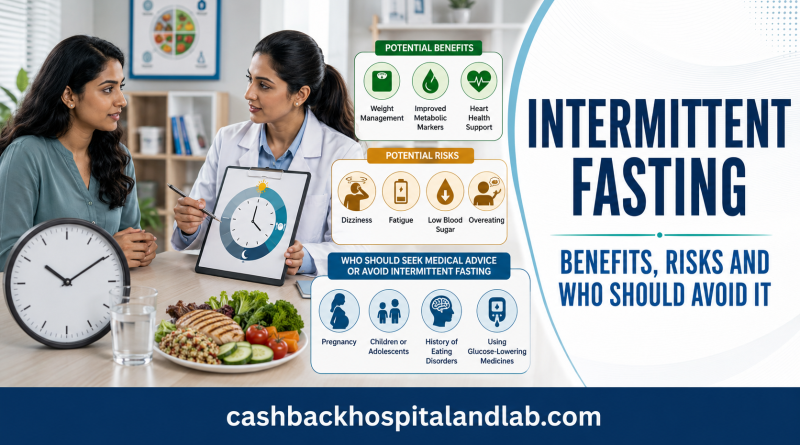
42. Who Should Avoid or Seek Medical Advice Before Fasting?
Particular caution is appropriate for:
Pregnant people
Breastfeeding people
Children and adolescents
Underweight individuals
People with eating disorders
Frail older adults
People taking insulin or hypoglycaemia-causing medicines
Significant kidney disease
Advanced liver disease
Certain gastrointestinal disorders
People taking medicines requiring food
Anyone with recurrent fainting or hypoglycaemia
The decision should be individualized.
43. Is Breakfast Really the Most Important Meal?
There is no universal rule that every healthy adult must eat breakfast.
Some people function well without it.
Others experience:
Headache
Poor concentration
Excessive hunger
Overeating later
when breakfast is skipped.
Meal timing should fit the individual's health and lifestyle.
44. Does Skipping Dinner Work Better?
Not necessarily.
From a circadian perspective, avoiding very late eating may have advantages.
But an eating schedule must remain:
Nutritionally adequate
Socially practical
Sustainable
An early dinner may suit some people better than skipping dinner entirely.
45. Is OMAD Healthy?
OMAD = One Meal A Day.
This is a relatively restrictive fasting strategy.
Potential concerns include difficulty consuming adequate:
Protein
Fibre
Vitamins and minerals
in a single meal.
It can also encourage very large meals.
OMAD is unnecessary for most people seeking healthy weight management.
46. What About 24–72 Hour Fasts?
Longer fasts carry greater risk of:
Dehydration
Electrolyte abnormalities
Hypoglycaemia
Muscle loss
Medication-related complications
Long fasting periods should not be casually promoted as “detoxification.”
More extreme fasting is not automatically healthier.
47. Fasting and Gallstones
Rapid weight loss and very low calorie intake can increase the risk of:
Gallstone formation.
This is another reason to avoid aggressive crash dieting or repeated extreme fasting for rapid weight loss.
48. Fasting and Menstrual Health
Very low energy availability can interfere with reproductive hormones.
In some women, excessive dietary restriction combined with intense exercise may contribute to:
Irregular periods
Loss of menstruation
This is a sign that nutritional intake and overall energy balance require attention.
49. Fasting and Sleep
Going to bed after an enormous late meal can worsen:
Reflux
Discomfort
Sleep quality
But going to bed extremely hungry can also disturb sleep.
A sustainable eating schedule should support rather than disrupt sleep.
50. Ayurveda and Intermittent Fasting
Ayurveda traditionally places importance on:
Agni — digestive/metabolic function
Ahara — food
Kala — appropriate timing
Langhana — reducing/lightening approaches in selected circumstances
Classical Ayurvedic practice does contain concepts involving dietary restraint and fasting.
However:
Modern 16:8, 5:2 and alternate-day fasting protocols are contemporary dietary strategies.
They should not be presented as though classical Ayurvedic texts prescribed today's exact intermittent-fasting schedules.
51. Ayurveda Emphasizes Individualization
Ayurvedic dietary practice traditionally considers differences in:
Constitution
Digestive capacity
Age
Season
Strength
Disease state
This principle actually aligns with an important modern message:
The same fasting schedule is not appropriate for everyone.
52. Fasting Is Not a Detox
❌ MYTH
“Fasting removes all toxins from the body.”
✅ FACT
The human body continuously processes and eliminates metabolic waste through organs including:
Liver
Kidneys
Lungs
Gastrointestinal tract
Fasting does not replace these physiological systems.
53. Fasting Does Not Cure Diabetes
Intermittent fasting may improve blood glucose and weight in some people with type 2 diabetes.
But:
It should not be advertised as a guaranteed diabetes cure.
Some people can achieve diabetes remission after substantial sustained weight loss, but remission has specific clinical definitions and requires ongoing monitoring.
54. Fasting Does Not Guarantee Weight Loss
Someone can follow 16:8 every day and still gain weight if their eating window consistently provides more energy than they require.
Meal timing matters.
But so do:
Food quality
Portion size
Total calorie intake
Physical activity
55. Intermittent Fasting Myths vs Facts
| MYTH | FACT |
|---|---|
| 16-hour fasting automatically burns belly fat | Overall energy balance largely determines fat loss |
| Everyone should fast | It is inappropriate for some people |
| Longer fasting is always better | More restriction can increase risk |
| Fasting detoxifies the body | Liver and kidneys already handle metabolic waste |
| Autophagy begins exactly at 16 hours | Human timing is not established that precisely |
| Fasting cures diabetes | It may improve metabolic control but is not a guaranteed cure |
| You can eat anything during the eating window | Diet quality and quantity still matter |
| Black coffee burns fat dramatically | It is not a meaningful standalone weight-loss treatment |
| OMAD is the healthiest fasting method | It can make nutritional adequacy difficult |
| Fasting means avoiding water | Ordinary IF should not require dehydration |
| You will lose only fat | Muscle can also be lost |
| Fasting is always better than calorie restriction | Long-term results often depend more on adherence |
56. A Safer Way to Start
For a generally healthy adult who wants to try time-restricted eating, a gradual approach may be easier.
For example:
Step 1
Stop habitual late-night snacking.
Step 2
Establish approximately a 12-hour overnight fasting period.
Step 3
If comfortable and appropriate, consider gradually shortening the eating window.
Step 4
Monitor hunger, energy, sleep and exercise performance.
Step 5
Do not continue increasing fasting duration simply because “longer sounds healthier.”
57. What Should You Eat During the Eating Window?
Prioritize:
🥗 Vegetables
🍎 Whole fruits
🫘 Legumes
🌾 Whole grains
🥚 Appropriate protein
🥜 Nuts and seeds
🥛 Appropriate dairy or alternatives
💧 Water
Limit excessive:
Sugary drinks
Sweets
Deep-fried foods
Refined snacks
Ultra-processed foods
Fasting cannot compensate for a consistently poor diet.
58. Example of a 14:10 Pattern
An example might be:
8:00 AM — Breakfast
1:00 PM — Lunch
5:30 PM — Light early dinner
6:00 PM — Eating window closes
Overnight — Fast
8:00 AM — Eating resumes
This is only an example—not a universal prescription.
59. Example of a 16:8 Pattern
A possible schedule:
10:00 AM — First meal
2:00 PM — Main meal
5:30–6:00 PM — Final meal
6:00 PM–10:00 AM — Fast
For metabolic health, an earlier eating window may be preferable to concentrating most calories very late at night when practical.
60. What Should You Monitor?
If using intermittent fasting for weight management, consider tracking:
Body-weight trend
Waist circumference
Energy level
Exercise performance
Sleep quality
Hunger
Blood pressure when relevant
Blood glucose if medically indicated
For people with diabetes, medication and glucose monitoring require professional guidance.
61. Signs Your Fasting Plan May Be Too Aggressive
Reconsider the plan if you develop:
Persistent dizziness
Recurrent headaches
Fainting
Severe fatigue
Binge eating
Obsessive thoughts about food
Declining exercise performance
Significant muscle loss
Menstrual disturbances
Recurrent hypoglycaemia
A dietary strategy should improve health—not create new health problems.
62. When Should You Stop Fasting?
Stop the fast and seek appropriate medical advice when there is:
Significant hypoglycaemia
Fainting
Confusion
Severe weakness
Persistent vomiting
Significant dehydration
Serious illness
Do not continue fasting simply to achieve a target number of hours.
63. The Best Fasting Strategy
There is no universally best fasting schedule.
For one person:
16:8 may be convenient.
For another:
12:12 may be sufficient.
And for someone else:
Three balanced meals without fasting may be better.
The best strategy is:
Safe + nutritionally adequate + sustainable + compatible with your health conditions and medications.
The Bottom Line
Intermittent fasting can be a useful option for some adults, particularly when it helps:
Reduce overall calorie intake
Control late-night eating
Improve meal structure
Support weight loss
Improve metabolic health
But it is not magical.
Its potential risks include:
Hunger
Headache
Dizziness
Dehydration
Hypoglycaemia
Inadequate nutrition
Muscle loss
Disordered eating patterns
And some people require particular caution or should avoid unsupervised fasting.
Conclusion
Intermittent fasting is best viewed as one possible way of organizing food intake, rather than a universal health prescription.
You do not need a 16-hour fast to be healthy.
You do not need to skip breakfast to lose weight.
And you do not need prolonged fasting to “detox” your body.
For people who enjoy a structured eating window and can maintain good nutrition, intermittent fasting may be a practical tool.
For others, conventional balanced meals and portion control may work equally well—or better.
Choose nutrient-rich foods.
Maintain adequate protein.
Exercise and preserve muscle.
Stay appropriately hydrated.
Avoid extreme fasting.
Adjust diabetes medicines only with professional guidance.
Use a schedule you can sustain safely.
Ultimately, the best dietary pattern is not the one with the longest fasting window.
It is the one that improves your health and can be maintained over the long term.
Disclaimer: This article is for general educational purposes and does not replace individualized medical or nutritional advice. People who are pregnant or breastfeeding, have diabetes requiring glucose-lowering medication, eating disorders, significant kidney or liver disease, are underweight or frail, or take medicines that require food should seek appropriate professional advice before beginning intermittent fasting.
cashbackhospitalandlab.com