
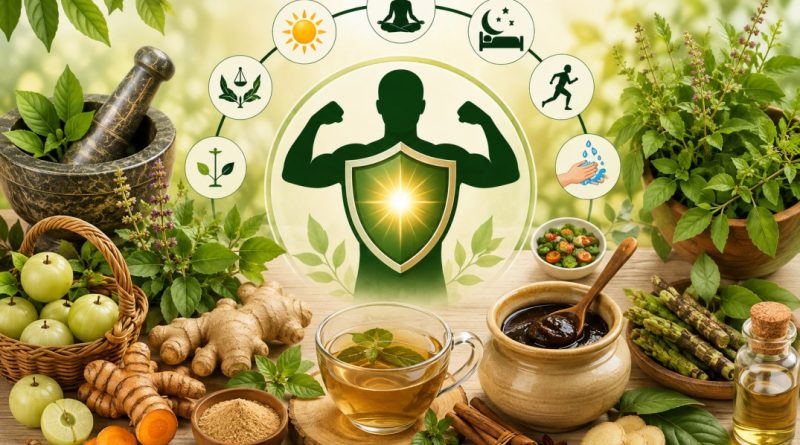
Ayurveda for Immunity: What Actually Helps?
“Boost your immunity” is one of the most common claims in wellness marketing. But the immune system is highly complex, and more immune activity is not necessarily better. A healthy immune system needs appropriate regulation—strong enough to defend against infections while controlled enough not to damage the body's own tissues.
Ayurveda approaches resilience through concepts such as Vyadhikshamatva (व्याधिक्षमत्व), Bala (बल), Ojas (ओजस्), Agni (अग्नि), Rasayana (रसायन), Ahara and Dinacharya.
Ayurvedic diet, sleep, exercise and selected herbs may support general health, but no herb can guarantee protection from infections.
1. Vyadhikshamatva – The Ayurvedic Concept of Resistance to Disease
A key Ayurvedic concept related to disease resistance is Vyadhikshamatva.
Classical Ayurveda explains that resistance to disease is not identical in every individual.
A well-known statement from Charaka Samhita says:
न च सर्वाणि शरीराणि व्याधिक्षमत्वे समर्थानि भवन्ति।
Meaning
Not all individuals possess the same capacity to resist disease.
This observation remains relevant today: susceptibility to infections can vary according to age, nutrition, vaccination status, genetics, underlying disease, medications and other factors.
2. What Does Vyadhikshamatva Mean?
Ayurvedic commentators commonly interpret Vyadhikshamatva through two broad functions:
व्याधिबलविरोधित्वम् — the capacity to oppose the strength or progression of disease.
व्याध्युत्पादप्रतिबन्धकत्वम् — the capacity to resist the development of disease.
These concepts resemble the broad idea of disease resistance, but Vyadhikshamatva should not be treated as an exact synonym for the modern immune system.
Modern immunity involves specialized cells, antibodies, cytokines, lymphatic organs and complex molecular pathways.
3. Ojas – Vitality and Resilience
Ojas (ओजस्) is another major Ayurvedic concept associated with vitality and strength.
A classical statement says:
ओजस्तु तेजो धातूनां शुक्रान्तानां परं स्मृतम्।
Meaning
Ojas is traditionally described as the supreme essence associated with properly nourished Dhatus.
Ayurveda therefore connects resilience with the overall state of nutrition and health.
However:
Ojas ≠ white blood cells
Ojas ≠ antibodies
Ojas ≠ a laboratory measurement of immunity
It is a traditional physiological concept.
4. Bala – Strength & Resistance
Bala (बल) broadly refers to strength or capacity.
Ayurveda traditionally recognizes different contributors to Bala, including constitutional, age-related, seasonal and acquired factors.
This is an important principle because immune resilience is also affected by:
- Age
- Nutrition
- Sleep
- Physical fitness
- Chronic disease
- Stress
- Medications
- Previous exposure and vaccination
Therefore, Ayurveda does not need to be reduced to a single “immunity kadha.”
5. Agni and Health
Ayurveda places great importance on Agni, the principle associated with digestion and metabolism.
A famous classical statement from Charaka Samhita says:
शान्तेऽग्नौ म्रियते युक्ते चिरं जीवत्यनामयः।
रोगी स्याद्विकृते मूलमग्निस्तस्मान्निरुच्यते॥
Meaning
Classical Ayurveda regards properly functioning Agni as fundamental to health and disturbed Agni as an important contributor to disease.
From a practical perspective, adequate nutrition and digestive health are certainly important for overall wellbeing.
But Agni should not be equated directly with immune-cell function or metabolism as defined by modern biochemistry.
6. Rasayana – Ayurveda's Healthy-Ageing Approach
Rasayana (रसायन) is one of Ayurveda's major approaches to supporting health, vitality and healthy ageing.
A classical verse from Charaka Samhita, Chikitsa Sthana states:
दीर्घमायुः स्मृतिं मेधामारोग्यं तरुणं वयः।
प्रभावर्णस्वरौदार्यं देहेन्द्रियबलं परम्॥
Meaning
Rasayana is traditionally associated with supporting longevity, memory, intellect, health, vitality and strength of the body and senses.
Rasayana therefore represents much more than consuming herbal supplements.
It includes healthy living, appropriate nourishment and individualized care.
7. Myth: “The Stronger the Immune System, the Better”
❌ MYTH
“We should continuously stimulate or boost the immune system.”
✅ FACT
The immune system needs balance and appropriate regulation, not permanent stimulation.
Excessive or misdirected immune activity contributes to conditions such as:
- Allergies
- Autoimmune diseases
- Chronic inflammatory disorders
Therefore, scientifically, “supporting immune health” is generally a better concept than indiscriminately “boosting immunity.”
8. What Actually Helps Immune Health?
The strongest foundations include:
- Adequate nutrition
- Adequate protein
- Sufficient vitamins and minerals
- Regular physical activity
- Good sleep
- Avoiding smoking
- Appropriate vaccination
- Managing chronic diseases
- Good hygiene
- Appropriate medical treatment
No herbal product can compensate completely for persistent sleep deprivation, malnutrition or uncontrolled chronic illness.
9. Ayurvedic Diet for Immunity
Ayurveda emphasizes appropriate Ahara according to the individual, season, digestion and health.
A practical balanced diet should include:
- Vegetables
- Seasonal fruits
- Pulses and legumes
- Whole grains
- Nuts and seeds
- Adequate protein
- Appropriate healthy fats
- Sufficient fluids
Dietary variety is usually more useful than relying on one “superfood.”
10. Protein and Immunity
Protein is essential for numerous physiological processes, including components of immune function.
Sources may include:
- Dal and pulses
- Beans
- Soy foods
- Dairy
- Eggs
- Fish
- Meat
- Nuts and seeds
Protein needs vary according to age, body size, activity level and health status.
An “immunity diet” consisting mainly of herbal drinks but inadequate in protein is not nutritionally balanced.
11. Micronutrients Matter
Normal immune function depends on adequate amounts of nutrients including:
- Vitamin A
- Vitamin C
- Vitamin D
- Vitamin B12
- Folate
- Zinc
- Selenium
- Iron
But more is not automatically better.
High-dose supplements can cause toxicity or interact with medicines.
Correct deficiencies when present rather than assuming everyone needs large supplement doses.
12. Amla – आमलकी
Amalaki/Amla is one of Ayurveda's most famous Rasayana foods.
It provides vitamin C and numerous plant compounds.
Amla can be incorporated into a healthy diet, but claims that it:
- Prevents every infection
- “Multiplies immunity”
- Replaces vaccination
- Cures viral disease
are not scientifically justified.
Think of Amla as a nutritious food and traditional Rasayana—not a vaccine substitute.
13. Guduchi – गुडूची
Guduchi (Tinospora cordifolia) has a long history in Ayurvedic medicine and is frequently marketed as an “immunity booster.”
Laboratory and preclinical research has identified potentially immunomodulatory biological effects.
However, this does not establish Guduchi as a universal infection-prevention medicine.
Important safety point
Reports of liver injury associated with Tinospora-containing products have raised safety concerns.
People with liver disease, autoimmune conditions or those taking multiple medications should be particularly cautious and seek professional guidance.
14. Ashwagandha – अश्वगन्धा
Ashwagandha (Withania somnifera) is traditionally classified as a Rasayana.
Research has explored potential effects on:
- Stress
- Sleep
- Physical performance
- General wellbeing
These effects may indirectly support health, particularly where chronic stress or poor sleep is a concern.
However, Ashwagandha is not proven to prevent common viral infections or replace vaccines.
It may also interact with medicines and is inappropriate for some people.
15. Tulsi – तुलसी
Tulsi/Holy Basil (Ocimum tenuiflorum) has extensive traditional use in Ayurveda.
It contains numerous phytochemicals and has been investigated for antimicrobial, metabolic and stress-related effects.
Human evidence for preventing clinically important infections remains limited.
Tulsi can be enjoyed as part of a diet or traditional beverage when appropriate, but it should not be presented as guaranteed infection protection.
16. Haridra – हरिद्रा
Turmeric (Curcuma longa) is widely used both as food and medicine.
Curcumin and related compounds have been extensively investigated for anti-inflammatory effects.
However, laboratory findings do not mean turmeric can cure infections in humans.
Culinary turmeric is generally very different from concentrated curcumin supplements, which may interact with medicines and are not suitable for everyone.
17. Ginger – शुण्ठी / आर्द्रक
Ginger has traditional Ayurvedic applications and is widely used as food.
It may help with certain digestive symptoms and contains biologically active compounds.
Ginger can form part of a healthy diet, but there is no basis for claiming that ginger tea makes a person immune to viral infections.
18. Chyawanprash
Chyawanprash is a classical Rasayana formulation with a long history of Ayurvedic use.
Modern products may contain Amla and numerous herbs, spices, ghee and sweetening agents.
Some studies have investigated immune-related outcomes, but evidence is insufficient to conclude that Chyawanprash reliably prevents infections.
People with diabetes or those limiting sugar should check the nutritional content of individual formulations.
19. Kadha – Helpful or Overhyped?
Traditional herbal decoctions may contain ingredients such as:
- Tulsi
- Ginger
- Cinnamon
- Black pepper
- Other herbs and spices
A warm drink may be comforting during minor respiratory illness.
But:
Kadha does not “kill every virus.”
Highly concentrated or excessive preparations can cause:
- Gastric irritation
- Heartburn
- Medication interactions
- Other adverse effects
Stronger is not necessarily better.
20. Honey and Respiratory Symptoms
Honey may help reduce cough symptoms in some people with uncomplicated upper respiratory infections.
However:
Never give honey to a child under 12 months of age
because of the risk of infant botulism.
Honey is also sugar and should be used appropriately in people with diabetes.
21. Sleep – One of the Most Underrated Factors
Adequate sleep supports normal immune regulation.
Chronic sleep deprivation can negatively influence multiple aspects of health.
Ayurveda has long emphasized Nidra (sleep) as fundamental to wellbeing.
A regular sleep schedule may therefore do more for general health than continually changing “immunity supplements.”
22. Exercise
Regular moderate physical activity supports:
- Cardiovascular health
- Metabolic health
- Sleep
- Mental wellbeing
- Healthy ageing
- Normal immune regulation
The goal is consistency rather than exhausting exercise.
Recovery, nutrition and sleep are particularly important after intense training.
23. Stress and Immune Health
Chronic psychological stress can influence sleep, behaviour and physiological systems involved in health.
Useful practices may include:
- Yoga
- Meditation
- Pranayama
- Walking
- Relaxation
- Social connection
- Appropriate psychological support
These practices can complement healthcare but should not be presented as treatments for serious infections.
24. Dinacharya – Daily Routine
Ayurveda emphasizes Dinacharya, or an appropriate daily routine.
Useful modern applications include:
Regular sleep + regular meals + physical activity + hygiene + adequate hydration + stress management.
The value of Dinacharya lies largely in consistent healthy habits—not in performing complicated rituals.
25. Ritucharya – Seasonal Adaptation
Ritucharya refers to adapting diet and lifestyle according to season.
This can be practically interpreted as adjusting:
- Clothing
- Hydration
- Physical activity
- Food choices
- Heat or cold exposure
Seasonal routines can support comfort and wellbeing, but they do not replace infection-control measures.
26. Vaccination and Ayurveda
MYTH:
“Good Ayurveda means vaccines are unnecessary.”
FACT:
Ayurvedic lifestyle practices and vaccination serve different purposes.
Vaccines train the adaptive immune system to recognize specific infectious threats.
Ayurvedic diet, sleep and lifestyle can support overall health but should not be presented as substitutes for recommended vaccination.
The two approaches do not need to be framed as opposites.
27. Antibiotics and Immunity
Antibiotics treat certain bacterial infections.
They do not treat ordinary viral colds or flu.
Unnecessary antibiotic use contributes to antimicrobial resistance and can cause side effects.
Likewise, avoiding medically necessary antibiotics because one is taking Ayurvedic herbs can be dangerous.
Treatment should depend on the actual diagnosis.
28. Autoimmune Disease Requires Special Caution
People with autoimmune conditions should be particularly cautious about products marketed as powerful “immune stimulants.”
An autoimmune disease already involves inappropriate immune activity against the body's own tissues.
Herbal products should be reviewed with healthcare professionals, especially when taking immunosuppressive or biologic medications.
29. When Should You Seek Medical Care?
Seek appropriate medical evaluation for symptoms such as:
- Difficulty breathing
- Persistent high fever
- Severe dehydration
- Confusion
- Chest pain
- Severe weakness
- Recurrent unusual infections
- Unexplained weight loss
- Persistent symptoms that are worsening
- Serious illness in infants, older adults or immunocompromised individuals
Do not delay medical care while trying multiple “immunity boosters.”
30. Ayurveda + Modern Medicine: A Practical Approach
A responsible integrative strategy is:
Balanced Ahara
↓
Healthy Agni & adequate nutrition
↓
Good Nidra
↓
Regular physical activity
↓
Stress management & Dinacharya
↓
Appropriate Rasayana when suitable
↓
Vaccination & infection prevention when indicated
↓
Medical diagnosis and treatment when ill
↓
Better Overall Health & Resilience
Immunity Myths vs Facts
| MYTH | FACT |
|---|---|
| One herb can boost immunity instantly | Immune health depends on many factors |
| More immune activity is always better | Immunity requires appropriate regulation |
| Amla prevents all infections | Amla is nutritious but not universal protection |
| Kadha kills viruses | It may be comforting but is not an antiviral cure |
| Guduchi is completely risk-free | Adverse effects, including liver injury, have been reported |
| Ayurveda makes vaccination unnecessary | Vaccination and healthy lifestyle serve different roles |
| Supplements compensate for poor sleep | Sleep is fundamental to health |
| Natural means completely safe | Herbs can cause side effects and interactions |
| Antibiotics cure viral infections | Antibiotics target susceptible bacteria |
| “Immunity booster” guarantees protection | No supplement can guarantee immunity |
What Does Science Actually Support?
Evidence is strongest for adequate nutrition, regular physical activity, sufficient sleep, avoiding smoking, managing chronic disease, appropriate hygiene and recommended vaccination.
Several Ayurvedic herbs contain biologically active compounds and are being investigated for immunological effects. However, laboratory or animal findings do not automatically prove that an herb prevents infections in humans.
For most commercial “immunity booster” products, evidence for meaningful prevention of serious infections remains limited.
The scientifically responsible position is therefore:
Support immune health—don't promise to supercharge it.
Conclusion
Ayurveda offers useful concepts for understanding health and resilience through Vyadhikshamatva, Bala, Ojas, Agni, Rasayana, Ahara, Nidra, Dinacharya and Ritucharya.
Traditional foods and herbs such as Amla, Tulsi, turmeric, ginger, Ashwagandha and selected Rasayana preparations can form part of an individualized healthy lifestyle when appropriate.
But no Ayurvedic herb, supplement, kadha or food can guarantee immunity from infection.
What actually helps most is surprisingly basic:
Eat adequately. Sleep well. Exercise regularly. Avoid smoking. Manage chronic disease. Correct nutritional deficiencies. Use vaccines when indicated. Treat infections appropriately.
Ayurveda can complement these foundations through its emphasis on balanced living, nourishment and individualized preventive care.
Disclaimer: This article is for educational purposes only and does not replace medical diagnosis, vaccination advice or treatment. Herbal medicines may cause side effects and interact with medications. Consult qualified healthcare professionals before using medicinal herbs, particularly during pregnancy, in children, with liver disease, autoimmune disorders or when taking prescription medicines.
cashbackhospitalandlab.com