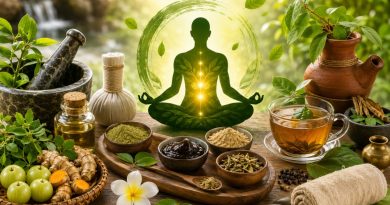

Ayurvedic Morning Routine for Busy People
A Practical Dinacharya Guide for Energy, Digestion & Wellbeing
Modern mornings can be rushed: wake up, check notifications, drink coffee, skip breakfast and hurry to work. Ayurveda offers a different approach through Dinacharya (दिनचर्या)—a traditional daily routine intended to support consistency, hygiene, digestion, sleep and general wellbeing.
The useful part is that you do not need a two-hour wellness ritual to incorporate Ayurvedic principles. For busy people, a realistic routine can take 10–20 minutes.
1. What Is Dinacharya?
Dinacharya combines:
Dina (दिन) = day
Charya (चर्या) = conduct/routine
It refers to daily practices traditionally recommended to maintain health and support physiological regularity.
Dinacharya includes concepts related to:
- Waking
- Natural elimination
- Oral hygiene
- Eye and facial care
- Exercise
- Abhyanga
- Bathing
- Food
- Sleep
- Mental discipline
Not every classical practice needs to be performed by every modern person every morning.
2. Classical Ayurvedic Principle
Ashtanga Hridaya, Sutrasthana begins its discussion of Dinacharya with:
ब्राह्मे मुहूर्त उत्तिष्ठेत् स्वस्थो रक्षार्थमायुषः।
Meaning
A healthy person is traditionally advised to rise during Brahma Muhurta for preservation of health and longevity.
This emphasizes regularity and an intentional beginning to the day.
It should not be interpreted as an instruction to sacrifice necessary sleep simply to wake extremely early.
3. Do You Have to Wake at 4 AM?
❌ MYTH
“Ayurveda says everyone must wake at 4 AM.”
✅ FACT
Brahma Muhurta is traditionally associated with the period before sunrise, but modern health also requires adequate sleep.
If waking extremely early leaves you chronically sleep-deprived, it defeats the purpose of a health routine.
For most adults, consistent adequate sleep is more important than forcing a particular clock time.
4. The First Rule: Don't Start With Your Phone
For many people, the first thing they see each morning is:
WhatsApp → Instagram → email → news → work messages.
This immediately exposes the mind to stimulation and demands.
A practical modern Dinacharya modification is:
Keep the first 10–20 minutes after waking relatively screen-free.
Use that time for basic hygiene, hydration and movement.
5. Wake at a Consistent Time
Regular wake times can support the body's sleep-wake rhythm.
Try to keep waking time reasonably consistent, including weekends when practical.
The goal isn't perfection.
Regularity matters more than an elaborate ritual.
6. Natural Elimination
Ayurveda gives considerable importance to Mala Pravritti, or appropriate elimination.
After waking, allow enough time to use the toilet without rushing.
Do not repeatedly suppress natural urges.
A healthy bowel routine is supported by:
- Adequate dietary fibre
- Hydration
- Physical activity
- Regular meals
- Appropriate toilet habits
7. Don't Force a Bowel Movement
❌ MYTH
“You must empty your bowels immediately after waking to be healthy.”
✅ FACT
Bowel patterns vary.
Some healthy people have bowel movements later in the day.
Repeated straining is not beneficial and may contribute to problems such as haemorrhoids.
Persistent constipation deserves appropriate assessment rather than aggressive daily cleansing.
8. Start With Water
After waking, drinking some water can be a simple way to rehydrate.
It does not need to be:
- Extremely hot
- Lemon water
- Copper water
- Honey water
- Herbal detox water
Ordinary safe drinking water is perfectly acceptable.
Drink according to thirst and individual needs.
9. Does Warm Water “Melt Fat”?
❌ MYTH
“Hot water melts abdominal fat.”
✅ FACT
Warm water may feel pleasant and support hydration, but it does not selectively melt body fat.
Body-fat reduction depends primarily on sustained energy balance, nutrition, activity and metabolic factors.
10. Oral Hygiene
Classical Dinacharya gives significant importance to cleaning the mouth and teeth.
A modern evidence-based routine should include:
Brush teeth twice daily with fluoride toothpaste.
Ayurvedic herbal products may be used according to preference, but they should not replace effective dental hygiene.
11. Jihva Nirlekhana – Tongue Cleaning
Tongue scraping is a traditional Ayurvedic oral-hygiene practice.
It may help remove:
- Tongue coating
- Food debris
- Some bacteria
- Compounds contributing to bad breath
Use a clean tongue scraper gently.
Scraping aggressively enough to cause bleeding is unnecessary.
12. Oil Pulling – Gandusha/Kavala
Traditional Ayurvedic oral practices include Gandusha and Kavala.
Modern “oil pulling” is commonly performed using sesame or coconut oil.
Some small studies suggest possible benefits for certain oral-health measures, but evidence remains limited.
Oil pulling should be regarded as an optional adjunct.
It does not replace:
Brushing + fluoride toothpaste + interdental cleaning + dental care.
13. Oil Pulling Does Not Detox the Body
❌ MYTH
“Oil pulling removes toxins from the bloodstream.”
✅ FACT
There is no convincing evidence that swishing oil in the mouth detoxifies the liver, kidneys or bloodstream.
Its plausible effects are local to the oral cavity.
14. Wash the Face and Eyes Gently
Simple facial cleansing can help you feel refreshed.
Avoid repeatedly putting unsterile herbal liquids, honey, oils or homemade preparations directly into the eyes.
The eyes are sensitive organs.
Persistent redness, pain or vision changes require proper eye assessment.
15. Nasal Care
Ayurveda describes Nasya, which involves nasal administration of selected preparations.
Clinical Nasya is a therapeutic procedure and should not automatically become part of everyone's DIY morning routine.
For nasal dryness or congestion, appropriate evidence-based approaches may be preferable depending on the cause.
Do not pour arbitrary herbal oils into the nose.
16. Abhyanga – Oil Massage
A famous verse from Ashtanga Hridaya states:
अभ्यङ्गमाचरेन्नित्यं स जराश्रमवातहा।
दृष्टिप्रसादपुष्ट्यायुः स्वप्नसुत्वक्त्वदार्ढ्यकृत्॥
Meaning
Regular Abhyanga is traditionally associated with reducing fatigue, pacifying Vata and supporting nourishment, sleep and skin health.
A full-body oil massage every morning may not be realistic for a busy person.
So simplify it.
17. The 3-Minute Abhyanga
On busy mornings, apply a small amount of suitable oil to areas that feel dry or tense, such as:
- Hands
- Feet
- Legs
- Shoulders
- Scalp when convenient
Massage gently for a few minutes.
Then shower if desired.
A short sustainable routine is better than an elaborate routine you abandon after three days.
18. Exercise – Vyayama
Ayurveda includes Vyayama (व्यायाम) as an important lifestyle practice.
Modern evidence strongly supports regular physical activity for:
- Cardiovascular health
- Muscle strength
- Bone health
- Metabolic health
- Mental wellbeing
- Sleep
- Healthy ageing
For a busy morning, even 5–10 minutes can be useful.
19. A Classical Shloka on Exercise
A well-known Ayurvedic description states:
लाघवं कर्मसामर्थ्यं दीप्तोऽग्निर्मेदसः क्षयः।
विभक्तघनगात्रत्वं व्यायामादुपजायते॥
Meaning
Appropriate exercise is traditionally associated with:
- Lightness
- Improved capacity for work
- Support for Agni
- Better physical conditioning
The emphasis should be on appropriate exercise, not exhausting yourself every morning.
20. Five-Minute Movement Routine
If you're short on time:
1 minute – gentle mobility
1 minute – squats or sit-to-stands
1 minute – wall or modified push-ups
1 minute – brisk walking/marching
1 minute – stretching and breathing
That's enough to establish the habit.
Longer exercise can happen later in the day.
21. Yoga
Yoga can fit naturally within a modern Ayurvedic morning routine.
A short sequence might include:
- Gentle spinal mobility
- Cat-cow
- Child's pose
- Simple standing movements
- Comfortable forward/backward mobility
- Relaxed breathing
Choose movements according to physical ability.
Painful poses should not be forced.
22. Pranayama
A few minutes of slow, comfortable breathing can provide a calm transition into the day.
For beginners:
Slow nasal breathing for 2–5 minutes
may be enough.
You do not need complicated breath retention techniques.
People with significant cardiovascular, respiratory or neurological conditions should seek appropriate guidance before intensive pranayama.
23. Meditation
Even 3–5 minutes of quiet attention can be valuable.
You might:
- Observe your breathing
- Sit quietly
- Practice mindfulness
- Pray according to personal preference
- Set priorities for the day
The purpose is not to “empty the mind completely.”
It is to create a deliberate pause before daily demands begin.
24. Sunlight in the Morning
Exposure to outdoor morning light can help regulate circadian rhythms.
When practical:
Spend a few minutes outside after waking.
This may support:
- Alertness
- Circadian timing
- Sleep-wake regularity
You do not need to stare directly at the sun.
Avoid direct sun-gazing.
25. What About Surya Namaskar?
Surya Namaskar can combine movement, mobility and controlled breathing.
For someone already comfortable with the practice, a few rounds may provide an efficient morning activity.
But it is not compulsory.
People with injuries or physical limitations should modify movements appropriately.
26. Breakfast: Is It Mandatory?
Ayurvedic diet should be individualized according to:
- Appetite
- Agni
- Activity
- Age
- Health conditions
- Meal timing
Not everyone needs an enormous breakfast immediately after waking.
If hungry, choose a nutritious meal.
If not hungry, forcing a heavy meal simply because it is “breakfast time” may not be necessary.
27. A Practical Breakfast
Depending on cultural preference and health needs, breakfast might include combinations such as:
- Oats with nuts and fruit
- Vegetable poha
- Upma with vegetables
- Eggs with whole grains
- Dalia
- Idli with sambar
- Curd/yogurt where appropriate
- Fruit with a protein source
Prioritize:
Protein + fibre + minimally processed foods.
28. Tea and Coffee
You do not necessarily need to eliminate tea or coffee to follow an Ayurvedic-inspired lifestyle.
Moderate caffeine consumption is tolerated by many adults.
However, excessive caffeine can contribute to:
- Jitters
- Palpitations
- Anxiety
- Sleep disturbance
- Gastrointestinal symptoms
If caffeine affects your sleep, reduce the amount or take it earlier.
29. Do You Need Herbal Tea Every Morning?
No.
Herbal beverages can be pleasant, but you do not need a special “detox tea” every morning.
Some herbs also interact with medications or may be inappropriate during pregnancy or certain illnesses.
Herbal does not automatically mean harmless.
30. Morning Detox Drinks
Be skeptical of claims involving:
- “Liver detox water”
- “Kidney cleanse”
- “Fat-melting tea”
- “Toxin-flushing juice”
- “Hormone-balancing water”
There is no universal morning drink that detoxifies every organ.
Your liver and kidneys perform continuous physiological processing and elimination.
31. Dinacharya and Agni
Ayurveda places great importance on Agni, representing digestive and metabolic function within its traditional framework.
A regular routine may indirectly support digestive wellbeing through:
- Consistent meal timing
- Appropriate portions
- Physical activity
- Sleep
- Reduced stress
- Avoiding habitual overeating
Agni should not be equated with a single modern enzyme or metabolic measurement.
32. Dinacharya According to Dosha?
Online Ayurveda often recommends entirely different morning routines for Vata, Pitta and Kapha.
Individualization can be useful, but don't make routine unnecessarily complicated.
A practical foundation works for most people:
Sleep + hygiene + movement + nutritious food + stress management + consistency.
Dosha-oriented modifications can be added when appropriate.
33. For Vata-Predominant Individuals
Traditional Ayurvedic approaches may emphasize:
- Regular timing
- Warmth
- Gentle Abhyanga
- Calm movement
- Consistent meals
- Avoiding excessive stimulation
The broader principle is stability and regularity.
34. For Pitta-Predominant Individuals
Traditional approaches may emphasize:
- Avoiding excessive heat
- Moderate rather than competitive exercise
- Cooling or neutral routines where appropriate
- Managing overwork
- Adequate rest
The broader principle is moderation.
35. For Kapha-Predominant Individuals
Traditional approaches may emphasize:
- More vigorous movement when appropriate
- Avoiding excessive morning inactivity
- Lighter meals according to appetite
- Mental stimulation
- Maintaining regular physical activity
The broader principle is activation and movement.
36. The 10-Minute Ayurvedic Morning Routine
For very busy people:
Minute 0–1: Wake, avoid phone
Minute 1–2: Drink water
Minute 2–4: Brush + tongue clean
Minute 4–7: Mobility/exercise
Minute 7–9: Slow breathing
Minute 9–10: Plan the day's priorities
Done.
You don't need twenty wellness products.
37. The 20-Minute Version
If you have a little more time:
2 minutes – hydration and toilet routine
3 minutes – oral hygiene
5 minutes – Abhyanga or self-massage
7 minutes – exercise/yoga
3 minutes – breathing/meditation
Then shower and continue your day.
38. The Biggest Mistake: Making Dinacharya Complicated
A morning routine involving:
oil pulling → tongue scraping → herbal water → Nasya → Abhyanga → yoga → pranayama → meditation → herbal supplements → elaborate breakfast
may sound impressive.
But if it takes 90 minutes and you cannot maintain it, it may provide less value than a simple routine performed consistently.
Ayurveda emphasizes appropriate routine—not wellness perfectionism.
39. Morning Routine: Myths vs Facts
| MYTH | FACT |
|---|---|
| Everyone must wake at 4 AM | Adequate, consistent sleep matters |
| Hot water burns belly fat | It hydrates but doesn't selectively burn fat |
| Oil pulling detoxifies blood | Evidence supports, at most, possible oral benefits |
| Everyone needs Nasya daily | Therapeutic Nasya should be individualized |
| You need 30 minutes of Abhyanga | A shorter routine can still be practical |
| Ayurveda forbids coffee | Moderate intake may be acceptable for many adults |
| Everyone needs a detox drink | Healthy organs already process waste |
| More yoga is always better | Exercise should suit ability and health |
| Everyone needs the same routine | Individual circumstances matter |
| Dinacharya must take an hour | A useful routine can take 10 minutes |
40. The Most Important Morning Habits
If you remember only a few things:
Wake consistently
Get enough sleep
Hydrate
Maintain oral hygiene
Move your body
Get some daylight
Eat according to hunger and nutritional needs
Avoid starting every morning with digital overload
These principles provide much of the value of a practical modern Dinacharya.
A Realistic Modern Dinacharya
Wake after adequate sleep
↓
Avoid immediate phone scrolling
↓
Water + natural elimination
↓
Brush + tongue cleaning
↓
Optional short Abhyanga
↓
5–15 minutes exercise/yoga
↓
2–5 minutes breathing/meditation
↓
Morning daylight
↓
Nutritious breakfast when appropriate
↓
Start Work With a Calm, Consistent Routine
Conclusion
Ayurveda's Dinacharya provides a useful framework for bringing regularity and intention into everyday life.
The classical advice:
ब्राह्मे मुहूर्त उत्तिष्ठेत् स्वस्थो रक्षार्थमायुषः।
reflects Ayurveda's longstanding emphasis on beginning the day deliberately.
But a modern Ayurvedic morning routine does not require waking at 4 AM, buying numerous herbal products or spending hours performing wellness rituals.
For a busy person, the most sustainable version may simply be:
Wake consistently + hydrate + oral hygiene + move + breathe + get daylight + eat well + delay unnecessary screen stimulation.
Even 10–20 minutes of consistent healthy habits can be more practical than an elaborate routine that cannot be maintained.
Keep Dinacharya simple enough to become part of your life.
Disclaimer: This article is for general educational purposes and does not replace individualized medical or nutritional advice. People who are pregnant, taking medication or living with chronic medical conditions should seek appropriate professional advice before using medicinal herbs, intensive pranayama, Nasya or other therapeutic Ayurvedic procedures.
cashbackhospitalandlab.com