
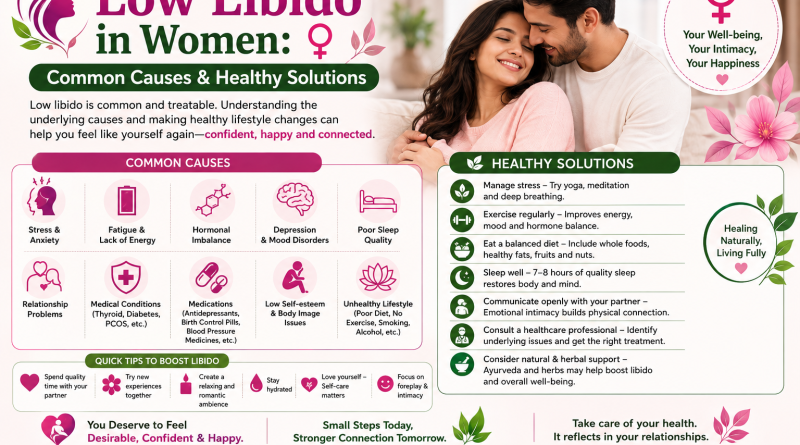
Low Libido in Women: Common Causes & Healthy Solutions
Low sexual desire, commonly called low libido, can affect women at different stages of life. It may be temporary or persistent and can be influenced by physical health, hormones, emotions, relationships, medications, and lifestyle.
Common Causes of Low Libido
Some common factors include:
- Hormonal changes during pregnancy, after childbirth, perimenopause, and menopause
- Stress, anxiety, or emotional exhaustion
- Poor sleep and fatigue
- Relationship difficulties or lack of emotional intimacy
- Pain or discomfort during sexual activity
- Vaginal dryness
- Certain medicines, including some antidepressants
- Health conditions such as diabetes or thyroid disorders
- Low physical activity and unhealthy lifestyle habits
Healthy Ways to Support Sexual Wellness
A healthy lifestyle can contribute to better overall sexual well-being:
- Get adequate, regular sleep.
- Manage stress through exercise, yoga, relaxation, or meditation.
- Eat a balanced diet with adequate protein, fruits, vegetables, and whole grains.
- Stay physically active.
- Communicate openly with your partner about intimacy and concerns.
- Address vaginal dryness or pain with a healthcare professional.
- Avoid smoking and excessive alcohol consumption.
- Review medications with your doctor if you notice changes in sexual desire after starting a medicine.
When Should You Seek Medical Advice?
If low libido is persistent, distressing, sudden, or affecting your relationship or quality of life, consider speaking with a gynecologist or other qualified healthcare professional. A medical evaluation can help identify possible hormonal, physical, psychological, medication-related, or relationship factors.
Important: There is no single “normal” level of sexual desire. What matters is whether a change is concerning or distressing for you.
This article is for general health education and should not replace individualized medical advice, diagnosis, or treatment.